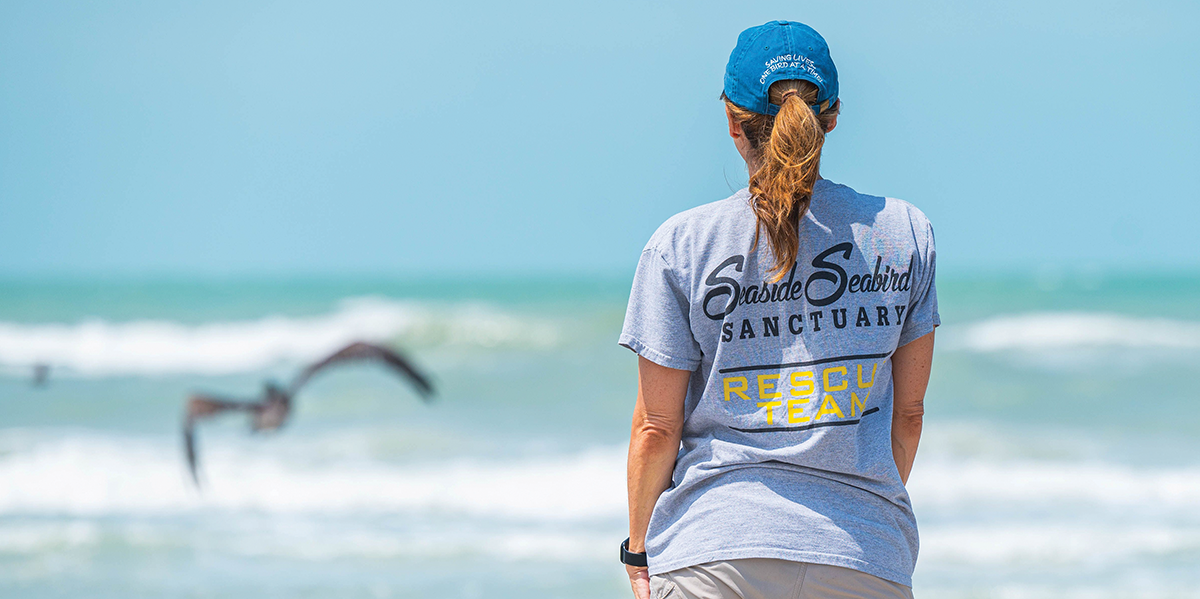
Nestled among the towering condos and vacation rentals that line the beaches of Indian Shores sits a different kind of sanctuary. It’s not the kind of place where visitors come to escape, unwind or indulge in a little pampering. There are no lazy beach days. Inside is a bustling wildlife hospital and rehabilitation center where visitors can wander among some of Pinellas County’s most remarkable residents—its wild birds.
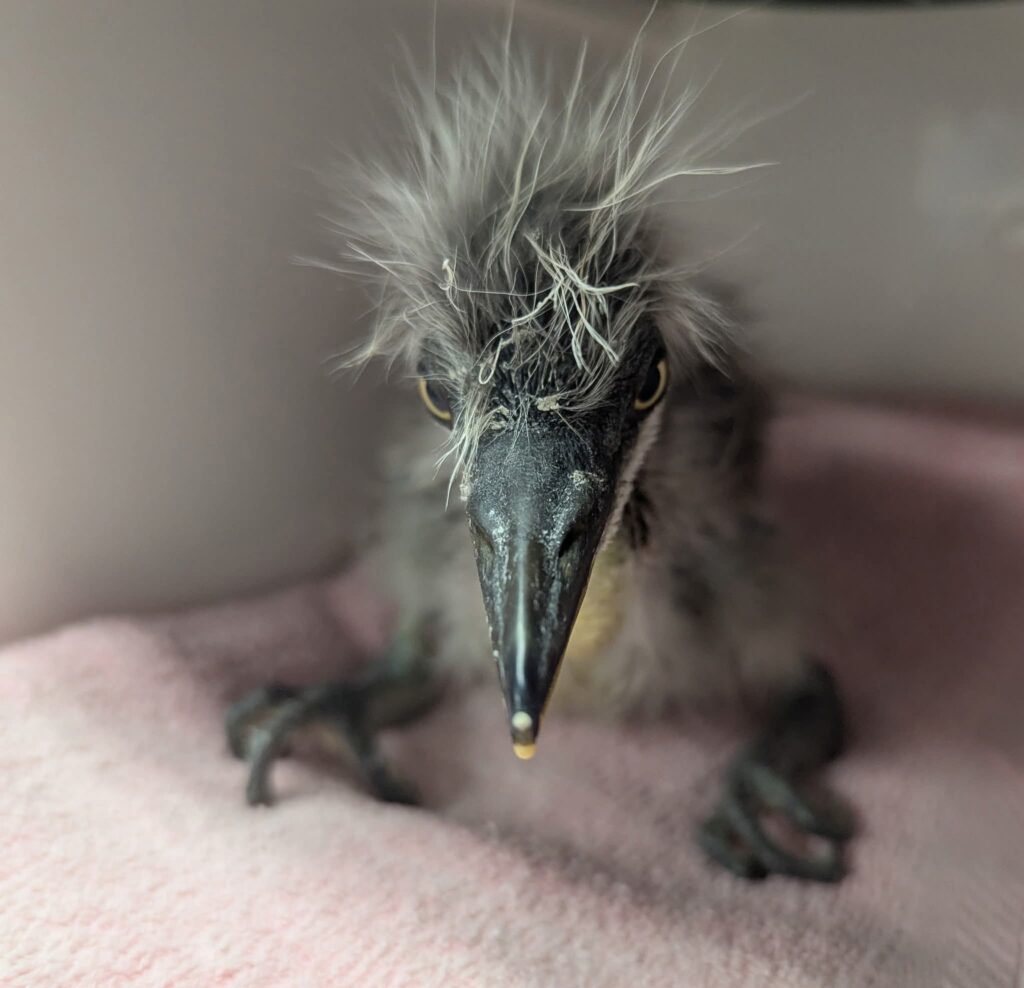
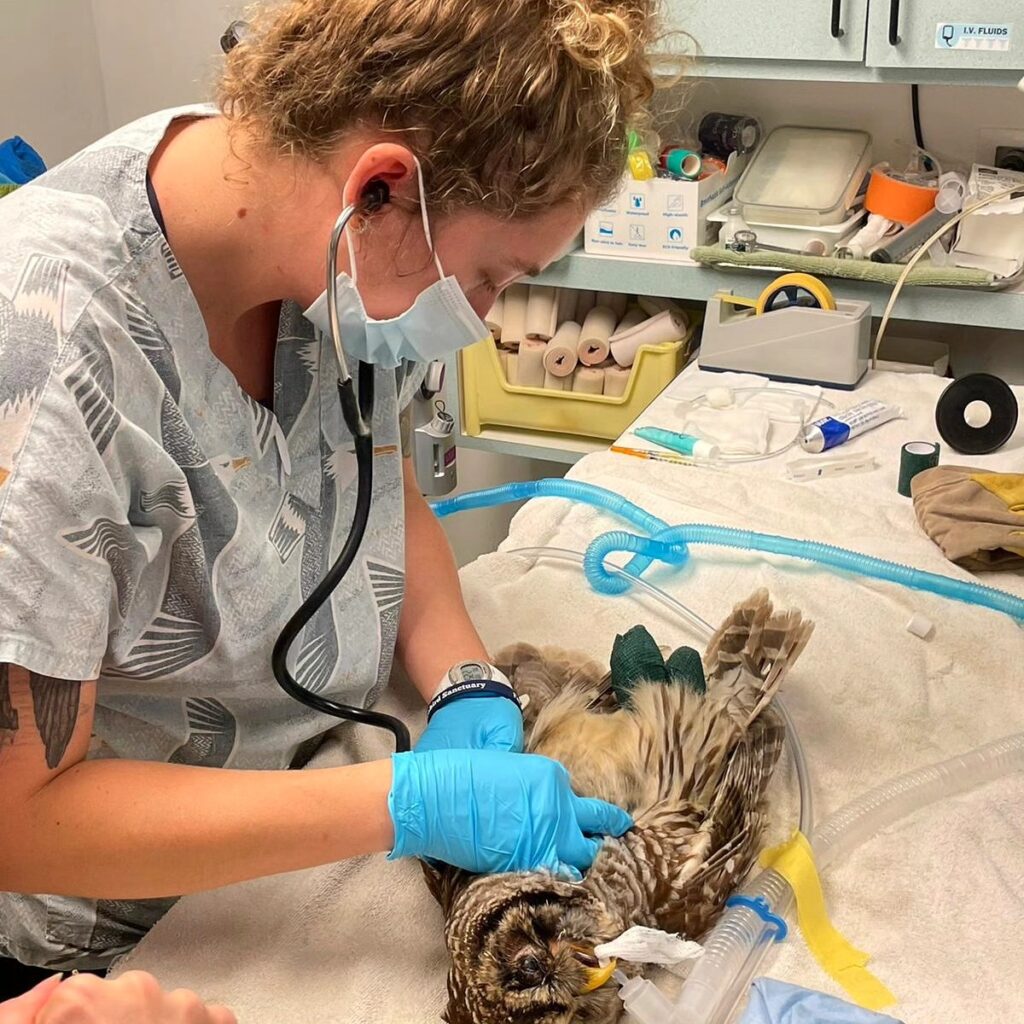
From April through August, “baby season” brings a steady stream of the sanctuary’s youngest patients, many of whom need hand-feedings every 30 minutes to an hour for much of the day. And they’re not the only ones needing around-the-clock care: The sanctuary’s most critical patients may require fluid therapy, medications, physical therapy and assisted feedings too. But the real work extends far beyond the property’s fenced walls—from rescuing and rehabilitating injured birds to educating the public and advocating for the wildlife that depends on Florida’s fragile coastline.
The Dr. Marie L. Farr Avian Hospital treats an average of 3,000 patients every year. Some are released back into the wild—about 46% of the sick and injured birds admitted are treated and rehabilitated. Others now call the beachfront property home.
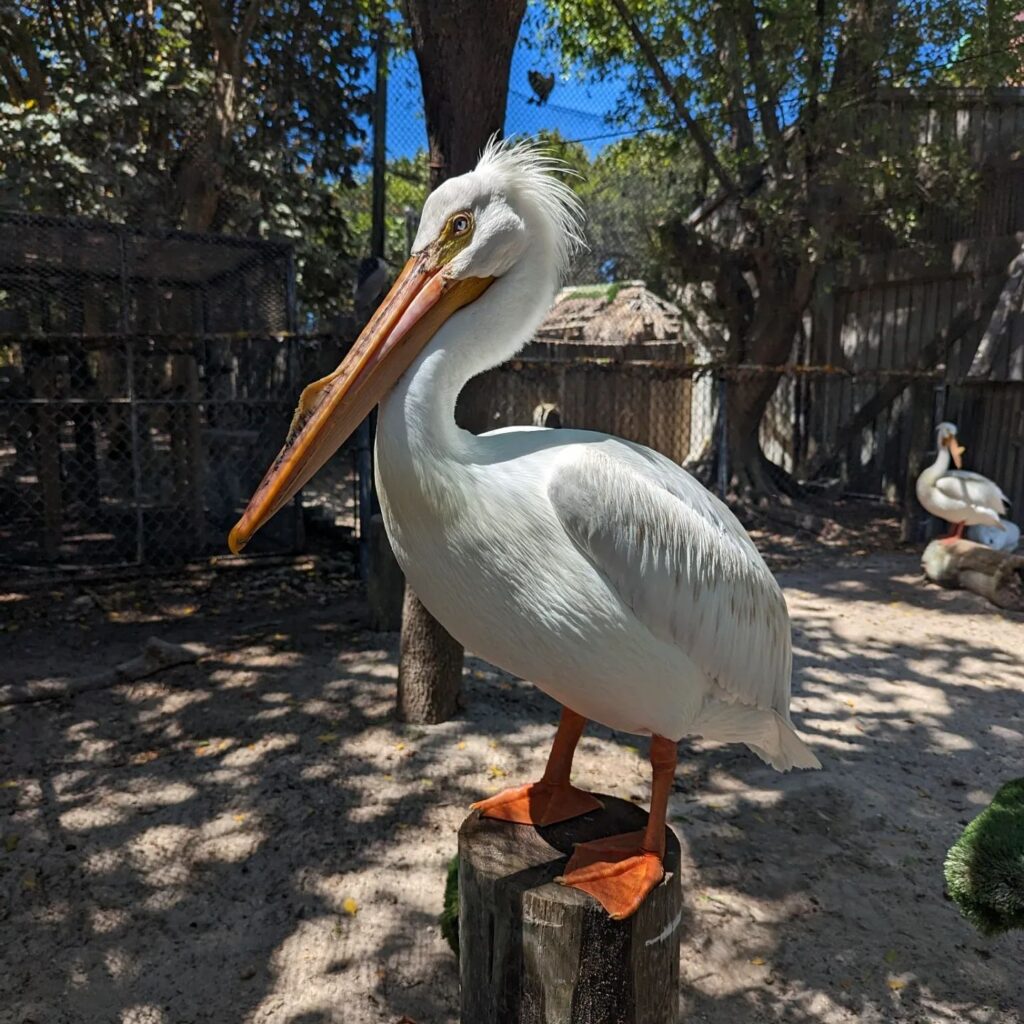
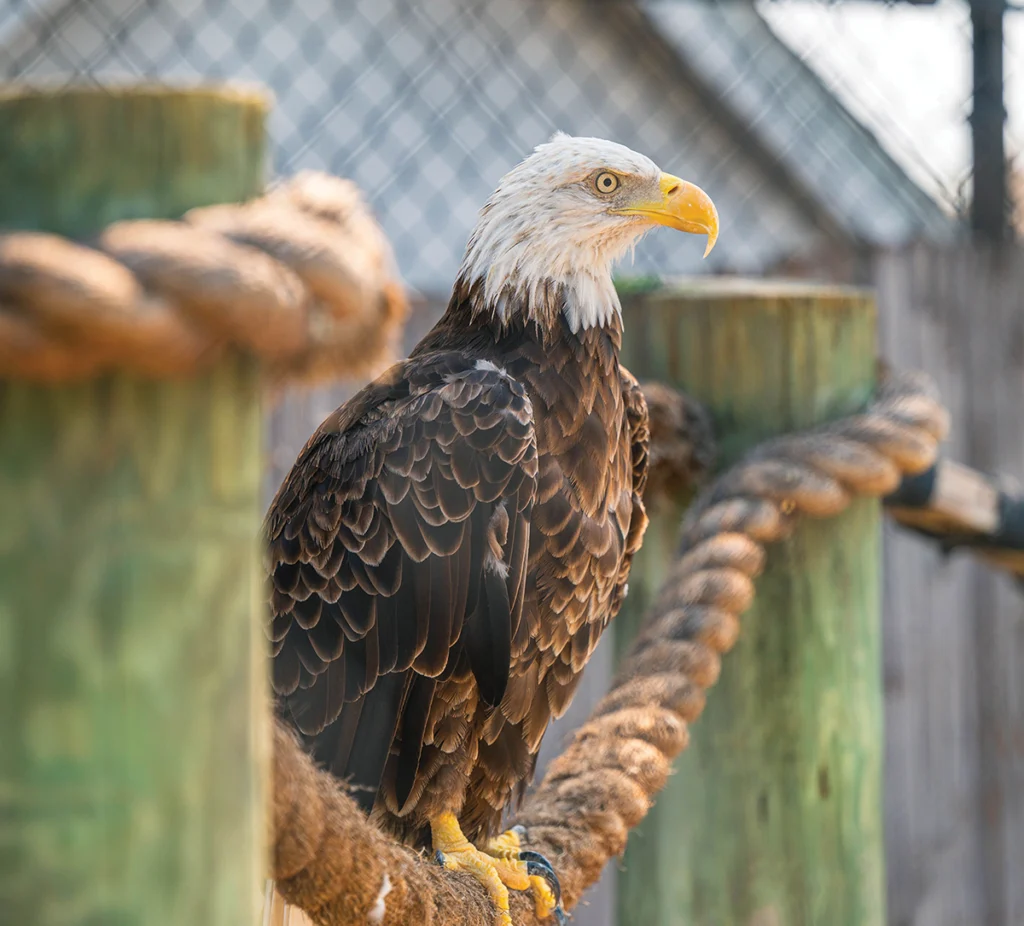
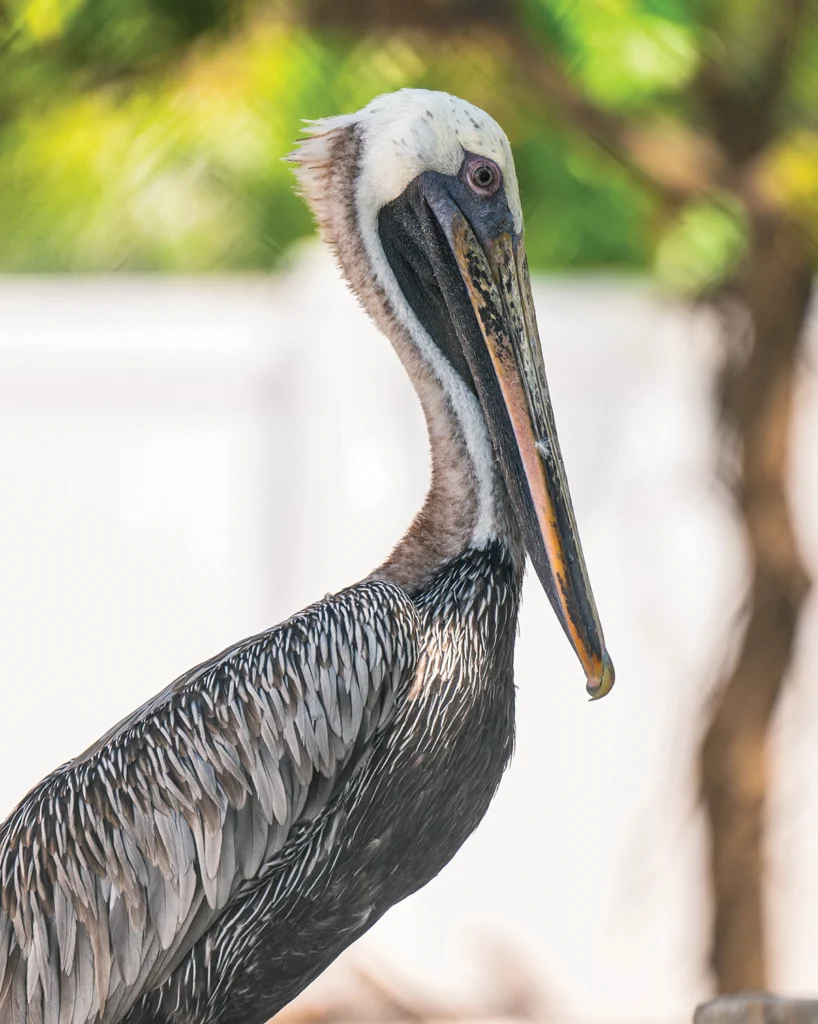
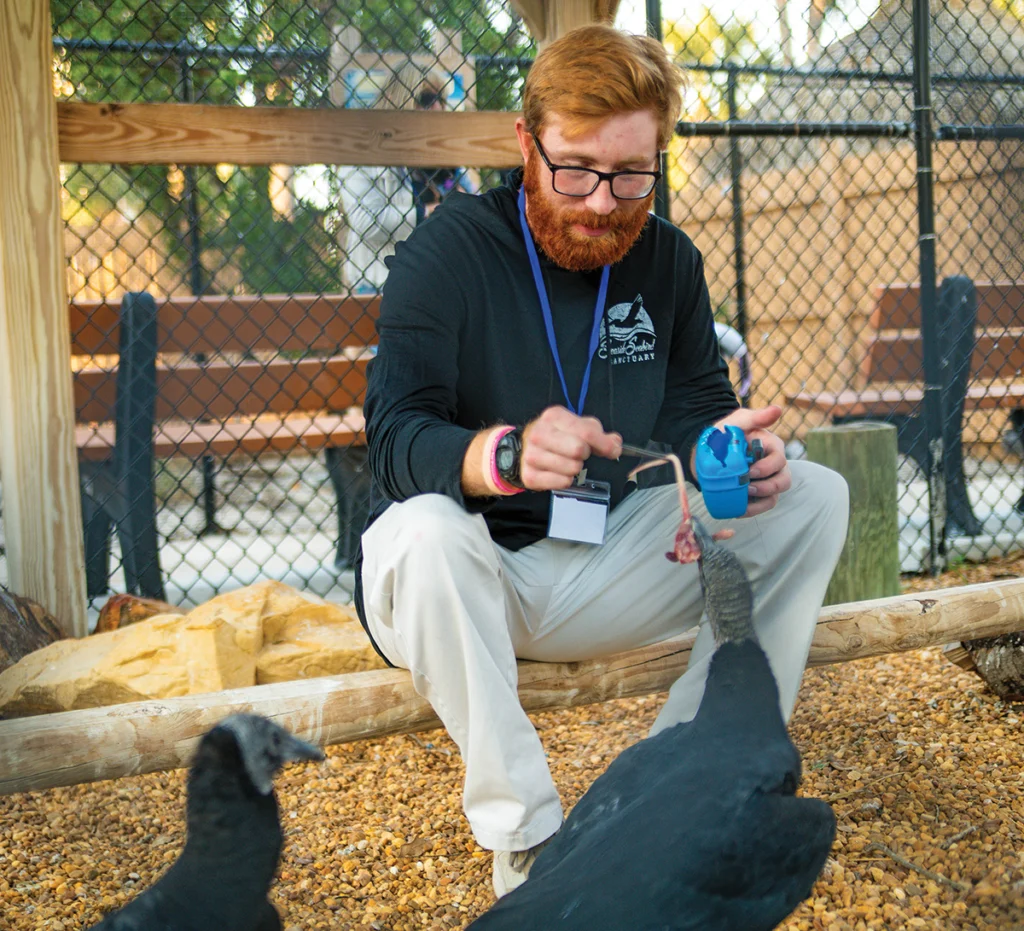
There are birds of prey like Roosevelt, a majestic bald eagle that arrived at the sanctuary with a fractured wing from an old gunshot wound. Then there’s Ruby, a turkey vulture that has been a resident for nearly a decade, unable to be released because of a previously healed shoulder fracture that makes foraging for food in the wild challenging. Like many pelicans, Red and Nigel suffered wing injuries that left them unable to fully recover and perform essential behaviors in the wild, such as hunting and migrating.
Each of the more than 80 permanently injured birds at the sanctuary has a story etched into its feathers—whether it’s a bird of prey, pelican, shorebird, wading bird, parrot or songbird.
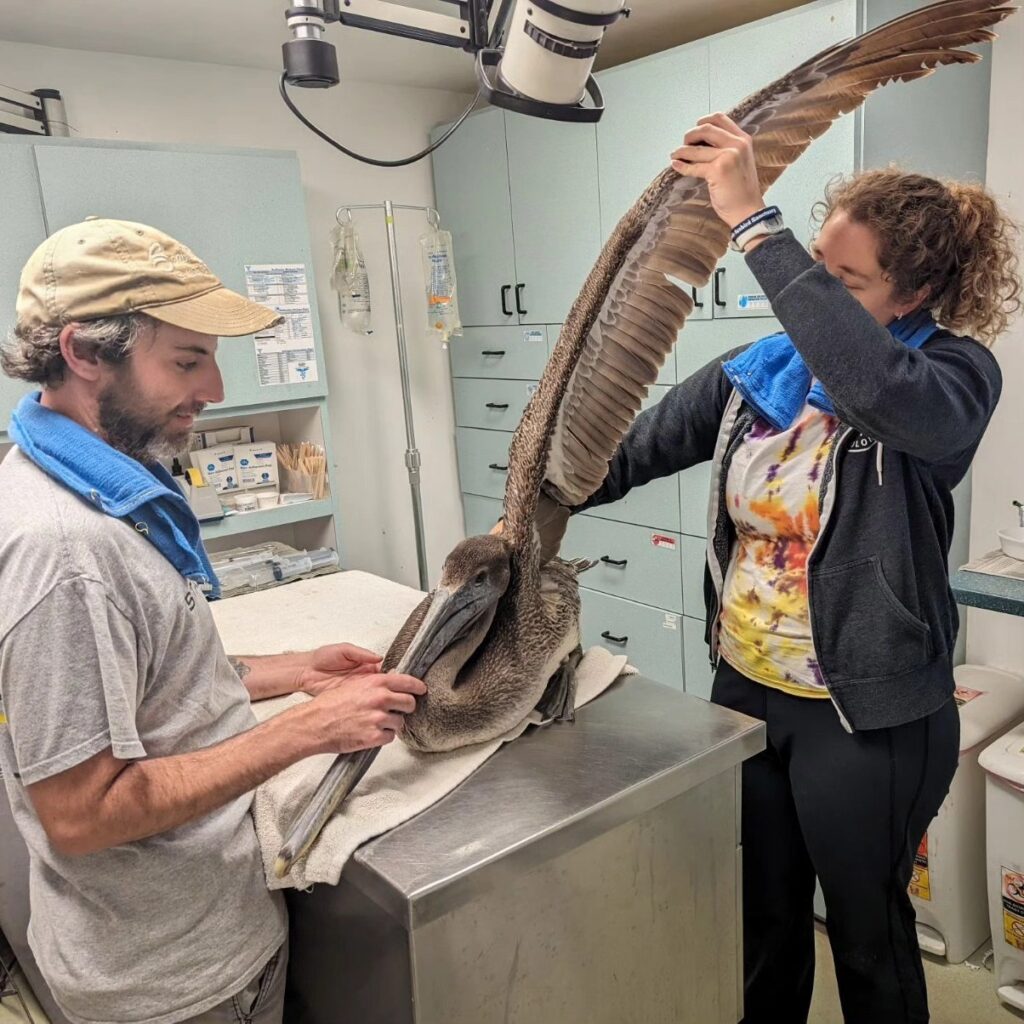
For the staff, running the sanctuary means juggling the urgent work of rescue and rehabilitation with the equally important mission of educating the public and advocating for wildlife. Even after nine years as the avian hospital director, Melissa Edwards says her patients continue to keep her on her toes, including a short-tailed hawk named Arnold who arrived in 2023 on what she describes as “death’s door.”
“He had a significant wing fracture that required a lot of care, and he was critically emaciated,” Edwards recalls. “Despite his critical condition, he thrived in care and proved us wrong. While his wing did not heal and required a partial amputation, he adapted beautifully and he is one of our most beloved avian ambassadors for his talkative nature and story.”
Yet even after years of unexpected recoveries, nothing could have prepared Edwards for the challenge that would soon test the sanctuary itself.
Weathering The Storm
It was only three days after Edwards brought her son home from the NICU at All Children’s Hospital when Hurricane Helene hit the Big Bend region in September 2024, bringing with it a devastating storm surge that impacted Florida’s West Coast.
“Two of our staff members live on-site at the sanctuary and they were there during the storm,” Edwards recalls. “That night was one of the longest nights of my life and the number one feeling to describe it was dread.”
While all of the birds fared well, the property did not. Around 2 to 4 feet of water filled the inside of the property’s buildings along with a significant amount of debris. The seawall behind the property and much of the fencing completely washed away. After temporarily placing the birds with other partner organizations, the sanctuary’s volunteers began repairs.
“We had just begun cleaning up when Hurricane Milton was forecasted to take a direct hit, so we did our best to secure the property, but we didn’t know what to expect,” she recalls.
The damage from the second storm was significant, taking down enclosure netting along with a few trees.
“The initial aftermath of Hurricane Helene was our lowest point, but we focused on the birds,” Edwards recalls. “Our birds needed us, and we were going to do everything in our power to ensure that they were taken care of and that they could return home.”
By April of this year, all the post-hurricane repairs were completed. That was accomplished through the efforts of a diverse group of community members and local organizations, including volunteers who helped with the clean-up, Greater Good Charities, which replaced the enclosure netting at no cost, as well as a GoFundMe campaign that raised over $100,000.
“The storms definitely forced us to reset in a significant way,” she offers. “But we do feel much better prepared to withstand future storms.”
A Deeper Connection
Far from Florida, another eagle has captured the attention of wildlife lovers around the world for years. Jackie, a beloved bald eagle at Big Bear Lake in California, had become an online sensation through livestreams that allowed people to follow her life and watch her raise eaglets with her mate, Shadow.
Edwards was one of those longtime followers, rooting for Jackie when she was ill and later hospitalized at the Ojai Raptor Center. She watched with a familiar sense of hope and heartbreak as Jackie ultimately succumbed to her illness in August.
“I was rooting for her full recovery, but it is the reality of our work sometimes that not all of our patients survive,” Edwards offers.
But as Jackie’s story unfolded, Edwards was troubled by another development: a wave of criticism aimed at Ojai, much of it fueled by misinformation spreading across social media.
“Social media has incredible benefits, especially for nonprofits because we can connect with such a large audience, but it also has its downfalls, which can lead to a significant strain on staff and volunteers dealing with the public demanding information,” she explains. “I think it's easy for people to forget that behind the photos and videos, the staff and volunteers are people too and they work so incredibly hard each and every day.”
While it’s easy for humans to anthropomorphize wildlife, Edwards contends that it’s important to remember that while they are sentient and intelligent, wildlife do not have the same emotions as humans.
“The accessibility of the nesting cams allows everyday people to connect with wildlife on a personal level, and this in turn inspires the passion for wildlife conservation that all of us want to see in the world,” she notes.
That connection to wildlife is something Mickey Zucker understands from the other side of the rescue equation. A Largo resident and longtime Seaside volunteer, she has spent the past seven years responding to calls about birds in trouble, often finding herself at the beginning of the very journey that eventually brings a patient to Seaside.
For Zucker, the sanctuary’s impact is measured not only in the thousands of birds it treats each year, but in the individual rescues—and the people who refuse to give up on them.
“Release is always the goal,” she explains. “The idea is to take the sick, injured or entangled birds, fix them and release them back into the wild so they can live out their natural lives in as normal a fashion as possible.”
Behind every successful rescue is a team willing to answer the call—often at a moment's notice in difficult conditions and with no guarantee of how the story will end. On Christmas Day 2023, Zucker drove to St. Pete after a great blue heron was spotted floating in the water.
“With very little hope, I took my long net and gently eased the head out of the water,” she recalls. “I was shocked to see it take a breath. Then another. I leaped down onto the floating dock, grabbed the bird with my bare hands, and eased the limp body out of the water.”
Heater cranked, she made the 30-minute drive to the sanctuary. As each day passed, the rehabbers saw small signs of improvement. By the next February, the heron was released.
“Seaside Seabird Sanctuary is a unique and special place where I am so impressed and enamored of all they do that I donate my time copiously and freely,” Zucker enthuses. “The people who work here, staff and volunteers, are some of the most kind, caring and competent people I know.”
Hope Takes Flight
For all the sanctuary has weathered, its gaze remains fixed on what comes next. Over the next five years, Edwards hopes to expand its operations, build new enclosures for resident birds of prey and create an Aquatic Rehabilitation Complex to replace the pelagic bird tanks lost in the storms. The planned complex would include three pools and specialized platforms and perches, giving seabirds the water access they need for feather conditioning and providing aquatic physical therapy for birds recovering from leg and foot injuries.
But for Edwards, the sanctuary’s future ultimately rests on something less tangible than new buildings and enclosures—the people who believe in its mission. After the storms, the community rallied around Seaside, reinforcing for Edwards that the sanctuary's work matters far beyond its gates.
“Our sanctuary family is a small but incredible group of people dedicated to our mission, and it is an honor to work alongside them,” Edwards declares. “After our community rallied around in the aftermath of the storms, it affirmed for us that our community truly wants us here and sees the work that we do.”
Visit seasideseabirdsanctuary.org to learn more.