Many wines, particularly high-quality varietals, improve with age, while others are best enjoyed when young. To preserve the longevity of wines that benefit from "cellaring," it's necessary to maintain specific storage conditions that allow them to mature properly. Whether you're just starting or already have an age-worthy collection, these guidelines will ensure that, when the time comes to uncork your wine, it reveals the full story of its unique and complex flavors.
Much like a cellar at a vineyard, the wines in our homes ideally need to be stored in a cool, dark, and humid environment. Varying conditions can cause the wine to deteriorate more quickly. Without a wine fridge or cellar, it is best to consume wine within a year of purchase. Only use your kitchen fridge for open bottles or ones meant for short-term consumption, as its dry environment can damage the cork. When corks dry out and become brittle, they allow more oxygen to enter the bottle. The key to proper storage is to keep wine on its side, ensuring the cork stays moist to protect the wine.
Excessive moisture can also be harmful, with ideal humidity levels for wine storage ranging between 55 and 75 percent. Ironically, typical Florida weather conditions—high humidity and heat—are exactly what wine needs to avoid. UV rays can alter the wine’s structure and spoil its flavor, while high temperatures can cook and rapidly oxidize it, turning it into vinegar. The ideal storage temperature for all wines is a consistent 55 degrees Fahrenheit.
When setting up storage space in a home, there is room for creativity in both design and function.
“I like it to feel like a true cellar and use a brick herringbone floor and walls to accent.” explains Stefanie Barrett, senior designer at Strobel Design Build. “The biggest challenge is finding the right space to put it. You can utilize the underside of a staircase, a linen or pantry closet or even create an entire wine room.”
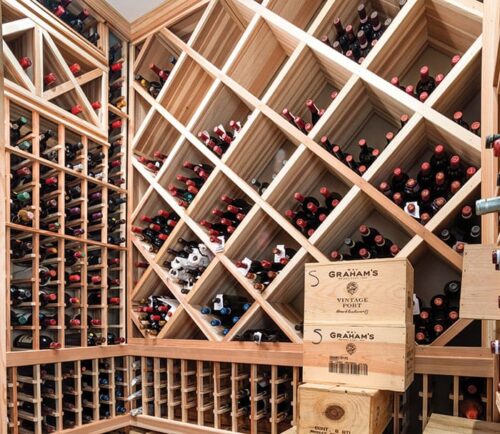
If you do go this route, Suzanne Van Selow, owner of Van Selow Design Build, advises installing an exterior door, insulating all walls and ceilings, using a fire-rated sealant, water-resistant drywall and porcelain, tile or hardwood for the floors.
“Correct room preparation and temperature are crucial to the proper aging of wine,” Van Selow says. “If you want to add a little pizzazz, a wine cooler can be a perfect addition.”
A professional storage facility is another option for those who don't have the space or desire to create a custom storage solution at home. St Pete Cellars has a state-of-the-art wine storage warehouse, in a no-flood zone neighborhood, available for their clients. Following Hurricane Milton, many local wine shops used their cellar to store their collections.
“It is the safest place in town for them to be,” co-owner, cellar master and resident sommelier Dan Myers offers. “People who don’t have the square footage because they’re downsizing, for instance, are a big part of our clientele.”
Memberships include an online catalog of each client’s collection, advance tickets to on-site events and wines purchased through the bottle shop at a discounted price. Regardless of the level of your collection, they guarantee a controlled environment to ease potential woes of security, temperature and humidity.
Of course, temperature protocols for storing wine differ from those for serving it. Often, red wines are served too warm and whites too cold. A general rule of thumb is that the fuller the body, the warmer the serving temperature, starting with light-bodied reds at 55-60 degrees Fahrenheit and light-bodied whites at 45-50 degrees Fahrenheit. As wine warms up, more layers of aromas will be revealed.
To elevate the wine experience, the right tools and proper etiquette go a long way. Before uncorking the bottle, ensure you have the proper materials ready: a sturdy wine key, appropriate glassware and a polishing cloth to complete the presentation. These details enhance both the ritual and enjoyment of the moment.
Your investment in the right high-quality glassware can also enhance the experience, but it requires proper care and attention. A classic tulip-shaped glass with a rounded bowl allows the wine’s maximum surface area to interact with oxygen and enhances aromatics towards the nose at the rim. The stem not only prevents the wine from warming too quickly in your hand, but also aids in appreciating its true color with elegance. Crystal glasses typically feature thinner, finer rims as compared to regular glass. Beyond aesthetics, the delicate rim allows the wine to flow smoothly onto the palate, ensuring a more refined and pleasurable drinking experience and is said to deliver a more authentic representation of its intended flavors and aromas.
Start by selecting at least two different styles of glasses that complement each wine varietal. Make sure you have enough of each style to accommodate special occasions, especially when hosting larger groups of guests.
Opening your bottles before guests arrive allows the wine time to breathe, softens tannins and releases aromas. This is where decanters or aerators can enhance the process. The best time to let it “open up” depends on the age and structure of the wine. After that, the most important thing is to swirl, smell, sip and enjoy!
Pam Coyle is a professional sommelier and can be reached at pamanncoyle@gmail.com