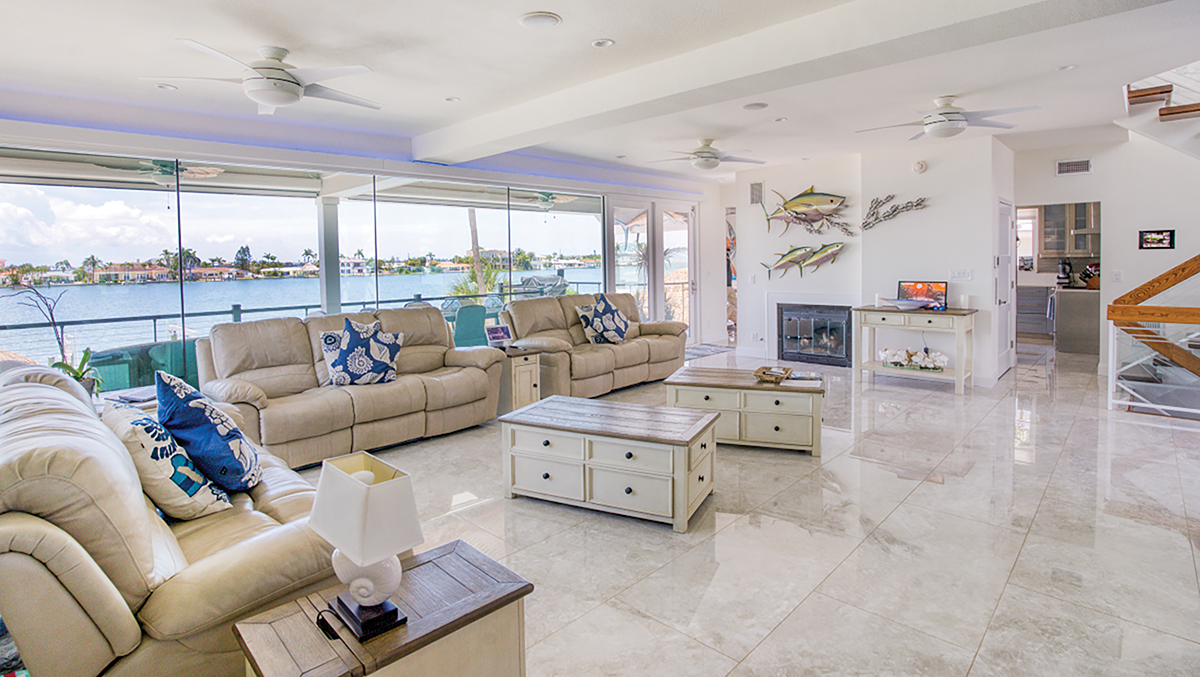
Over the past few years, homeowners have begun moving to larger size tiles for flooring and wall coverings. The main reason is that there are fewer grout joints to clean and to eliminate the disruption grout lines create when aiming for a certain desired pattern or finish appearance.
Even when installing rectified tiles, (tiles made at the factory with a perfect 90-degree edge), a small grout line remains, making larger pieces of material more attractive. Large format tiles are very popular in larger rooms, and their use in floor-to-ceiling shower walls is rapidly increasing. Other areas where their use is increasing are decorative wall features, fireplace surrounds, and even kitchen backsplashes. Porcelain is the most widely available material for large, oversized tiles.
While these large tiles offer spectacular, modern appearances, they do come with drawbacks. One is a myth that the install labor would be less expensive because it’s only one piece of tile, say a 24” x 48” instead of what might be two or four pieces. Quite the opposite is true, the labor rate is at a premium for several reasons:
- Handling is cumbersome; requires at least a two-person crew to move them on-site plus freight costs may be higher.
- Expert skill for installation is required for proper bonding and alignment.
- Floors must be leveled perfectly using self-leveling materials to prevent future cracking and lippage (uneven joints) and walls must be made to be perfectly plumb. These extra steps increase both material and labor costs.
- Excess waste may be generated, driving up the material costs, when using large format tiles in small rooms or on irregularly shaped floors and walls.
- Often, a specialized saw is needed to cut tiles on site to eliminate cracks along the edges.
To achieve the most seamless, sleek modern appearance, the best installation pattern is vertically stacked for walls and horizontal grid for floors, often called a “soldier pattern”. This method will also help to create a more “open feel”. Offset patterns tend to create a more fragmented look and can make a room feel smaller.
For floor and wall coverings, popular large-format tile choices include finishes that feel natural, warm, and timeless, such as natural stone textures, warm neutral tones or soft matte concrete finishes.
Because these selections have a major impact on the overall look of the space, working with a designer is highly recommended. A designer can help you choose colors and textures that complement your existing space—or a newly remodeled area—so the finished design feels cohesive and remains enjoyable for years to come!