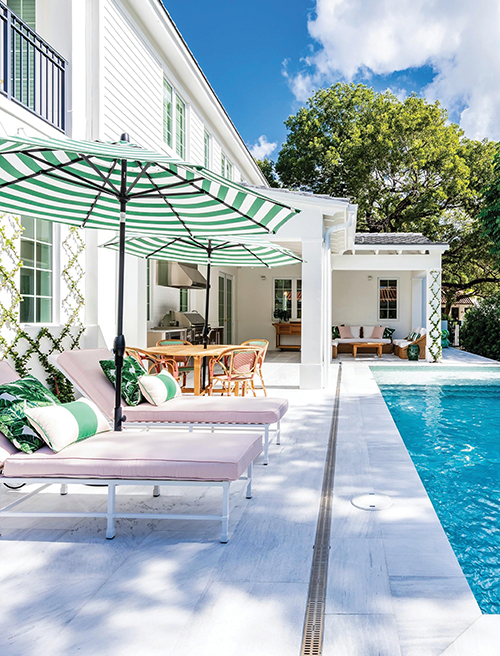
Now more than ever, homeowners are seeking comfort and thoughtful curation that reflects their values and lifestyle, rather than outdoor spaces that feel like an afterthought. This has sparked a desire to transform backyards into personal retreats where intentional living meets elevated design. From meditative gardens and wellness elements to resort-style furnishings that blend refined aesthetics with sustainability, these spaces are designed not just to look beautiful, but to feel genuinely restorative.
Mindful Style
Homeowners are increasingly seeking outdoor furnishings and finishes that balance environmental responsibility with sophisticated style. Recycled composite materials, responsibly sourced wood and powder-coated metals engineered for longevity are replacing short-lifecycle products.
“More and more, consumers are seeking sustainable luxury because it bridges the gap between high-end aesthetics and personal values. Our curated collections feature some of the highest-quality materials in the industry, including powder-coated aluminum, sustainable teak and Ipe wood, UV-protected resin wicker, recycled marine-grade polymer and high-performance fabrics like Sunbrella, allowing us to help clients create spaces that meet that expectation and feel effortlessly luxurious,” Stephanie Stegman of Elegant Outdoor Living explains. “For many luxury consumers today, sustainability is not just an ethical choice, but a signal of quality, craftsmanship and thoughtful design.”
A Natural Extension
While indoor-outdoor living has long been a cornerstone of Florida homes, today there’s a desire to make these spaces a seamless, natural extension of the home, enhancing the ease of interconnected living. By bringing nature inside through biophilic design—using materials, textures and color palettes inspired by the outdoors—you create interiors that flow effortlessly into exterior spaces, fostering a sense of balance, harmony and greater enjoyment of your home.
Pools are also no longer treated as add-ons or standalone features. Modern pool design is focused on creating an integrated environment with a focus on customization. Industry experts have seen an increase in resort-inspired elements, from installing plunge pools to incorporating sun shelves and hot tubs.
“These elements are often enhanced with additional features such as waterfalls and larger deck areas, creating inviting and functional spaces for relaxation and entertainment,” explains Doug King, the owner of King Contracting. “These upgraded pool areas are typically complemented by a range of exterior features. Stone or paver walkways, often lined with soft LED lighting, guide guests to focal points like gas fire pits, outdoor kitchens and comfortable covered patios or pergolas. Together, these amenities contribute to a cohesive and welcoming outdoor environment that supports both leisure and social gatherings.”
In fact, chromatherapy LED lighting, cascading waterfalls and bubbling fountains are increasingly recognized as essential, multi-sensory components in designing wellness zones. They work together to induce a state of deep relaxation by combining color therapy with immersive, natural soundscapes that provide a soothing refuge from the stresses of daily life.
Water Ways
According to From The Ground Up Pools in Seminole, plunge pools are ideal for homeowners seeking the benefits and enjoyment—but without the maintenance of a traditional pool—or those looking to enhance a limited outdoor space. This trend, known as “aquatic downsizing," promotes the idea that plunge pools provide the luxury of a swimming pool without the logistical headaches of a full-sized installation. They offer the same core enjoyment factors as larger pools, such as cooling off, hydrotherapy and a visual focal point for the landscape, but with a smaller price tag and faster installation time.
To create a calm, resort-like atmosphere, many designers are utilizing muted tones and materials like charcoal, deep blue and matte stone in patio designs.
Beyond the Pool
While pools anchor many outdoor plans, water features are increasingly being expressed in quieter, more architectural forms. Reflecting pools with minimalist edges mirror surrounding greenery and sky, adding visual depth without requiring complicated upkeep. Meditation gardens, seating alcoves and minimalist plant compositions provide visual calm and sensory balance. In regions with intense sun and seasonal rainfall like ours, shade structures have also become essential design elements. Pergolas with adjustable louvers, retractable canopies and screened patios allow outdoor spaces to remain usable throughout the year and evoke a sense of timeless sophistication.
Connected Comfort
Technology is quietly transforming outdoor spaces in ways that make life easier and more enjoyable. Smart irrigation systems adjust watering based on the weather, while app-controlled lighting and pool systems let you set the perfect ambiance and temperature with the touch of a finger.
“Homeowners are constantly seeking innovative ways to improve the safety and comfort of their living spaces. With a variety of options available, many are turning to smart home technology, that can be controlled via cell phone, allowing instant access and use upon arriving home after a long day at work,” King explains. “The integration of health and safety features not only improves daily living but also increases property values. Homeowners seeking to upgrade from their original purchase are especially interested in properties equipped with these modern amenities, making them a valuable investment for the future.”
Natural Instincts
Sustainable planting is taking center stage in Central Florida landscapes, especially as decreased rainfall has become a growing concern. Using native and climate-adapted plants not only cuts down on irrigation needs but also supports pollinators and local ecosystems. Smart techniques like drip irrigation, organic mulching and rain gardens help manage runoff and keep soil healthy.
Xeriscaping has also come a long way. What was once seen as sparse, desert-style landscaping is now lush and layered, with texture, color and seasonal interest. These designs deliver big visual impact while using fewer resources, making them a perfect fit for Florida’s coastal climate.
“Xeriscapes require less maintenance, apart from pruning and weed clearing,” according to Southern Hospitality Lawn and Landscaping in St. Pete. “Therefore, upkeep is minimal compared to many other landscaping designs. Using plants indigenous to Florida can remove the necessity for fertilizers or pesticides and you can use appropriate nutrients that are supplied by healthy soils.”
CLS Landscape Services in Clearwater also specializes in xeriscaping and works with clients to create lush, vibrant landscapes that are designed for our region’s environment and do not require excess water use.
“Many people have the misconception that xeriscaping only means landscaping rocks and cacti—but we are here to say that is simply not the case,” they offer. “Although it is important to work with vegetation that is natural to your climate and soil composition, you might be surprised at how many options you actually have.”
In fact, rigid garden layouts are giving way to more organic planting strategies. Free-form compositions blend native plants, flowering perennials and edible species to create landscapes that feel dynamic rather than static. This approach, often referred to as chaos gardening or rewilding-inspired planting, prioritizes biodiversity and ecosystem resilience. The result is a garden that changes subtly throughout the seasons while supporting pollinators and reducing long-term maintenance.
Foodscaping further expands this concept by integrating herbs, fruit shrubs and edible plants into ornamental beds, allowing landscapes to serve both aesthetic and functional roles.
This current crop of outdoor trends reflects our collective shift toward design-forward strategies for building more intentional living spaces that enhance our overall sense of well-being.