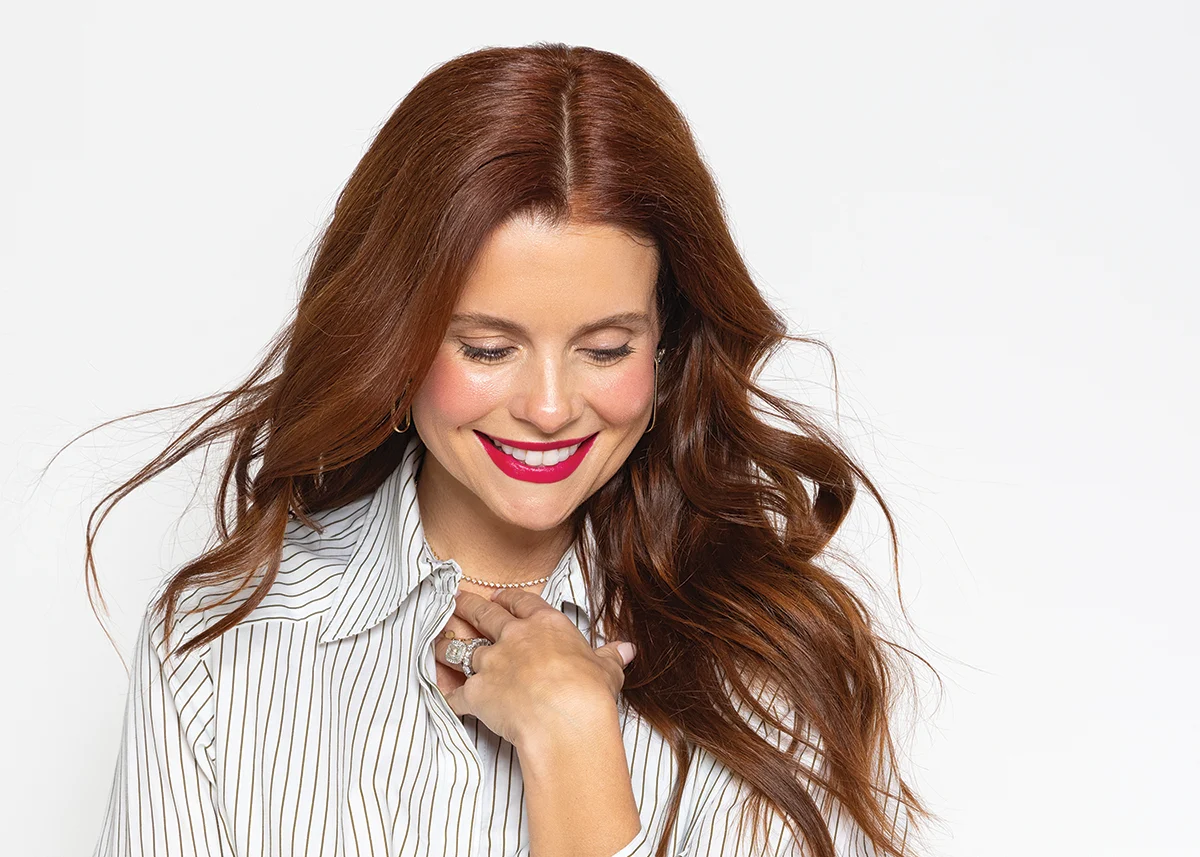
Keaton Fox is a contemporary visual artist whose work reflects her cultural research and explores the complicated realities of our modern times.
“Fox’s award-winning projects have been exhibited and acquired by galleries, institutions, festivals and museums, locally and internationally,” explains Roman Black of Creative Pinellas. “Her work consistently invites viewers to collectively question the aesthetics shaping the fever dream that is 21st-century life.”
With Quiet at Heart, Fox endeavors to place viewers inside a powerful yet obscure essay of the same name.
Take us through the genesis of this project.
It started after reading Joy Williams’ essay Quiet at Heart. This was a piece of writing that simply wouldn’t leave my mind. It’s an elusive essay—you can’t find it online. It’s out of print. I’ve only seen it within this coffee table book titled Florida, filled with mostly photographs of the state. At the time of this writing, there was only one copy available for purchase online. There used to be three. I bought the other two.
I remember my jaw dropping while reading it—not just because of the impossibility of capturing Florida in words, but because of how she did it. Written in 1999, the essay maps the paradoxes and meta-ness that make Florida what it is. I remember thinking, Everyone needs to read this.
This project is a way for people to be inside of the essay. A physical copy sits just outside the entrance for those who want to read it, but the installation itself is an abstract translation. Using video, textures and sound, I’ve created a space that evokes the wonder and the tension I felt while reading the essay for the first time.
“The ‘Real’ Florida is ‘Undiscovered’ Florida…the undiscovered, however, is not so easily marketable, being mostly the essence of a thing, its quiet heart. It is not so much that Florida is both more and less than she appears—'the state with the prettiest name…poorest postcard of itself…’ according to the words of the poet Elizabeth Bishop—but that she is frequently so different from the presentations made on her behalf.” This project aims to create a new kind of presentation on her behalf, one that brings, action and awareness to the majesty that is her quiet heart.
What do you hope visitors take away?
The goal is to evoke awe, deepen awareness and compel action to safeguard Florida’s natural and cultural landscapes. The Florida Wildlife Federation, Florida Access Network and Tampa Bay Watch are great places to start.
Your work explores memory, media and manipulation. How has your view changed in recent years?
It’s not so much that my view has changed—it’s that the questions I was asking have become commonplace. The futures I was warning about, experimenting with and critiquing—they’re here now. What used to feel speculative is now just…the everyday.
So, it makes sense that my work is shifting. I’ve found myself pulling away from a focus on technology and turning instead toward the natural world—grappling with how our memories and media can shape, manipulate and often destroy the landscapes around us. Florida is full of examples of this tension, playing out in real time.
How does being an artist based in Florida inform the themes and aesthetics of your work?
Deeply. I’ve always been drawn to paradoxes and contradictions—and it wouldn’t surprise me if Florida planted that in me. It’s a place where prehistoric creatures coexist with present-day monsters (often in the form of politicians) and where beauty is always balanced by danger.
I think of the way light glitters on water during the day and how tree shadows carve the night into the ground. The sugar soft sand. The mythical heat lightning. Florida is endlessly dramatic and always both/and. That’s something I try to visualize in my work—because so often, Florida is only shown as one thing. And she’s not.
In the future, how do you envision your art evolving?
I’m in a strange, interesting place in my artistic practice—going through an ego death of sorts. For the last 10 years, I’ve been exploring how technology manipulates memory and how memory, in turn, shapes our perceptions of reality. This decade of projects and research culminated in my art book Aesthetics for Forgetting, which was published late last year. That text marked the end of that chapter.
Now, I’m leaning toward the tangible. The natural.
An opening reception for Quiet at Heart will take place from 6-8pm on July 12th and an artist talk will be held from 6-8pm on August 2nd. This installation was made possible through a FloridaRAMA Fund artist grant, awarded to Fox through Creative Pinellas to support the creation of artwork that celebrates Florida’s unique cultural, natural and artistic environment. Quiet at Heart is the culminating exhibition of that grant program.