Our area, renowned for its sun-kissed beaches and vibrant cultural scene, is experiencing a notable transformation in its housing market. Once predominantly characterized by homeownership, the area is now witnessing a surge in rental demand. This shift mirrors national patterns, where renting is increasingly seen as a flexible and financially prudent choice.
In the second quarter of 2025, the number of renter households in the U.S. rose by 2.6 percent to approximately 46.4 million, driven largely by affordability challenges for prospective homebuyers. Pinellas County mirrors this trend, with rental demand climbing as the cost of homeownership becomes increasingly out of reach. Escalating property taxes, surging home and flood insurance premiums—particularly in coastal communities due to increased costs from natural disasters—along with high interest rates, sizable down payments, ongoing maintenance expenses and costly homeowner association (HOA) fees or special assessments are pushing many toward renting rather than buying.
According to reporting by Alex Gailey, based on a Bankrate study comparing average monthly mortgage payments to average monthly rent across the 50 largest U.S. metropolitan areas to determine short-term affordability, renting is cheaper than buying in most metro areas—especially in high-demand coastal markets like ours.
Rental Rewards
Despite these challenges, investing in rental property in Tampa Bay remains a smart choice for both new and seasoned investors. Strong rental demand, steady home appreciation and significant population growth make real estate investment in our communities a compelling strategy for building passive income and long-term wealth.
For instance, the median price of a single-family home in the St. Pete area in August was $400,000. Monthly rental costs ranged that month from $5,200 on Snell Isle to $3,500 for downtown and $1,725 in Old Northeast. These figures underscore the financial considerations influencing residents' housing decisions.
Real estate investors Ted and Jamie Garber focus on “affordable housing—not low, not high—something that just the everyday person can rent," Ted offers, explaining that they prefer to rent at or below market rates. "That allows us to get a lot of applications to really be able to pick and choose our tenants. And our tenants value the fact that they're renting slightly below market rate, so they're going to want to take care of the place. They're getting a deal and we're still making money from it all.”
As of 2025, the Garbers own 28 units across 15 commercial and residential properties. They report six figure earnings from their rental units since they began investing in 2020 to accelerate their progress toward financial independence, creating a compelling positive cash flow. They estimate they only spend about 10 hours a month on their real estate-related ventures.
“There’s appreciation—adding to your net worth and your end goal; depreciation—the ability to offset your income and your taxes; and then another main benefit is that your tenants are paying off your mortgage for you,” he advises.
Their approach to finding undervalued properties or negotiable deals while building their portfolio was simple.
"We would look for things that had been sitting for a while—maybe the marketing wasn't very good or it needed a cosmetic renovation," Jamie explains, describing how they focus on projects that require only a small lift, value‑add improvements like fresh paint, or updates such as new flooring.
Flexible Living
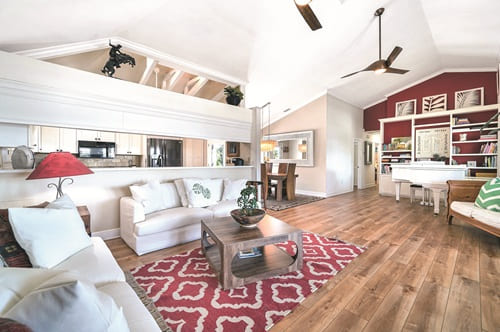
Kelly Strom, president of Pink Chair Realty, a brokerage she co-owns with her husband, licensed Realtor Joshua Holloway, highlights the appeal of short-term rentals, noting, "A lot of what we do is more like transitory rental. So, it’s a fully furnished, high-end product. You’re going into a home, just bringing your suitcase. It’s not necessarily just a vacation rental either. It might be 30 days, 60 days, 90 days, up to six months—not somebody coming for a week on vacation, but also not somebody who wants to drag in all their furniture."
This model caters to individuals in transition, such as those relocating for work or undergoing home renovations.
“We get a lot of people who are in transition for one reason or another,” she explains. “They’re moving to the area, they’re working remotely. I have a client who is renting a property in the Old Northeast area for three months while they are having their kitchen remodeled.”
She has clients who have just moved to the area and want to rent for a year and maybe even try out two or three different locations.
“I think people are seeing the value, even if they want to buy, of renting first,” Strom shares. “They want to keep their options open and sometimes home-ownership isn’t compatible with that.”

The New Norm
The demographic landscape of St. Petersburg is also evolving. One big change is that the median age of the 263,000+ population is currently 43.5 years.
“It used to be more of an elderly population, but that has changed so much,” she offers. “I would still say, at the price point that I’m renting, there are a lot of people who are sort of mid-career and a lot of retirees, while that younger demographic has expanded. This is somebody, both buyers and renters, who is pretty well off and is not opposed to splurging a little. I have a house pending now for a girl in her mid-20s who is buying in St. Petersburg and the house is over a million dollars.”
Strom also notes that many homeowners are rethinking how they utilize their properties because the current climate is a buyer’s market.
"A lot of homeowners with a second or third or home have thought about selling but haven’t been able to,” she explains. “So they turn it into one of these rentals, short- to mid-term, where they can still block off dates and go back there as they like." This strategy allows property owners to generate income while retaining personal use of their homes.
In the wintertime, she adds, “We have condos and houses that rent for $15,000 a month. And maybe they are not as extravagant as you would think at that price. I think a lot of people are surprised when they know what they can get for renting their house and still having it available for them to use as they want.”
Holloway advises that many people are choosing to rent rather than buy. “Even when people own their home outright, they still have to pay property taxes, possibly HOA dues, insurance and all that,” he says. “There is quite a bit of home maintenance when you are an owner and a lot of people prefer to punt the ball on that and rent. I think it’s also the ability to get up and go. If you’re renting, you’re kind of free to go, as long as you give notice, so I would think those are some of the reasons we are seeing that turn.”
Market Shift
Investor Rick Rivich, who has six properties that are managed by Pink Chair, asserts that geopolitical factors and post-hurricane recovery efforts have altered the rental market dynamics.
“Canadians were a large part of my target market and the combination of the current geo-political situation along with post-hurricane, a lot of them are not coming down to rent like they used to,” he explains. “And they have been backfilled by people who are still renovating their homes from the hurricane. My places are still rented, just not by Canadians. And I purchased my 2/2 condo from a Canadian, who, from a political standpoint, said I’ve had enough and sold and went back north.”
In Florida, and most of the country, he says, the buyer’s market is causing two things to happen.
“People who have low-interest rate loans stick where they are. If you are a buyer looking at 6.5 to 7 percent interest and trying to decide whether to get in now and pay a higher rate to refinance in the future, chances are you could probably rent, get all your expenses covered in that rental, not pay the 7% rate, and take the extra money—the difference between the rental and the higher mortgage rate—and put that out in the market, likely making more than if you put it towards the mortgage,” Rivich points out. “My advice to my own kids and everybody else is to let math be your answer. Don’t be emotional. Put it on paper. Go to a calculator. Figure out all the costs.”
Ultimately, our local housing scene continues to evolve, shaped as much by personal priorities as by the realities of the market. From young professionals exploring the area before settling down to seasoned homeowners turning spare properties into short-term rentals, the area reflects a community in motion. Flexibility, freedom and financial savvy are becoming just as important as square footage or location, showing that how people live here is as dynamic and vibrant as the region itself.
“