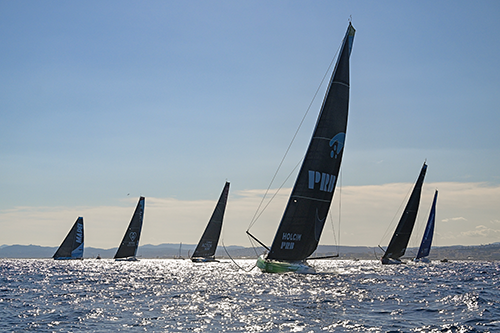
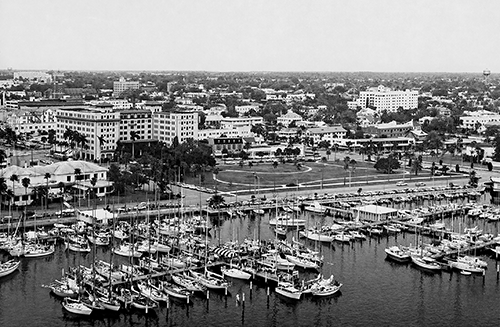
Long before foiling yachts and international regattas, the St. Petersburg Yacht Club helped shape a vibrant boating culture. Founded in 1909 by a small group drawn to Tampa Bay’s waters, the club began with a handful of vessels and a shared vision. By 1917, it had established a permanent waterfront home, creating a hub for social gatherings, spirited competition and a love of sailing.
A Century of Sailing
The club’s early years were defined by ambition as much as camaraderie. Fish Class sailboats, 20-foot gaff-rigged keelboats introduced in 1919, became a fixture of the bay, providing a level playing field for racers and a platform for junior sailors to learn the sport. These boats were rotated across regattas, fostering fair competition while strengthening bonds among Gulf Coast clubs. Through the Fish Class, St. Pete quickly became a center for organized racing, eventually connecting with the Gulf Yachting Association (GYA) and its regional championships.
By 1930, the club was pushing beyond Tampa Bay. Its first race to Havana, a 284-mile offshore challenge, announced St. Pete to the wider sailing world. Participation in the Lipton Cup and GYA competitions followed. Local sailors like Lou Schowe and George W. Rifley helped establish the club’s reputation for excellence. This race preceded the Regata del Sol al Sol, which celebrates it’s 53rd edition this year, connecting St. Petersburg and our sister city Isla Mujeres, Mexico.
“There’s always been a sense that sailing here is both competitive and deeply social,” Commodore Christian Bergstrom notes. “Each generation of sailors built on the last, expanding programs for youth, adaptive sailing and competitive crews.”
Continuing the Tradition
On any given weekend, the bay is a patchwork of sails—from junior sailors learning the basics to seasoned racers trimming for speed just offshore.
“While the Fish Class has long been retired, its legacy endures in how the club trains sailors, organizes regattas and fosters community,” Bergstrom shares. “Every new program, whether a junior fleet, an adaptive sailing initiative or an international clinic, reflects that commitment.”
A Global Chapter
In May 2027, St. Pete will welcome a leg of The Ocean Race, formerly the Volvo Ocean Race, sending crews on a 4,500-nautical-mile journey to Cascais on the Portuguese Riviera. The event will bring global attention to the city’s downtown waterfront and the St. Petersburg Yacht Club, marking the next chapter in a story that has been unfolding for more than a century.
The race village, interactive exhibits and docking of 60-foot IMOCA racing yachts will bring international attention while reinforcing values already central to St. Pete sailing: stewardship of the bay, collaboration and the pursuit of excellence.
The event will also offer something new for locals to experience, bring a surge of activity to local shops and restaurants, and further highlight St. Pete as a great place to live and visit.
The Throughline
When the starting signal sounds in May 2027, the fleet leaving St. Pete will carry more than crews and equipment. They will take with them a piece of the city’s sailing history, from early races to Havana to the traditions of junior programs and Fish Class regattas. It’s a continuation of something already in motion on the bay—one that reflects the city’s sailing heritage while signaling its growing presence on the global stage, bringing new attention, opportunity and momentum to the area.
To learn more, visit spyc.org