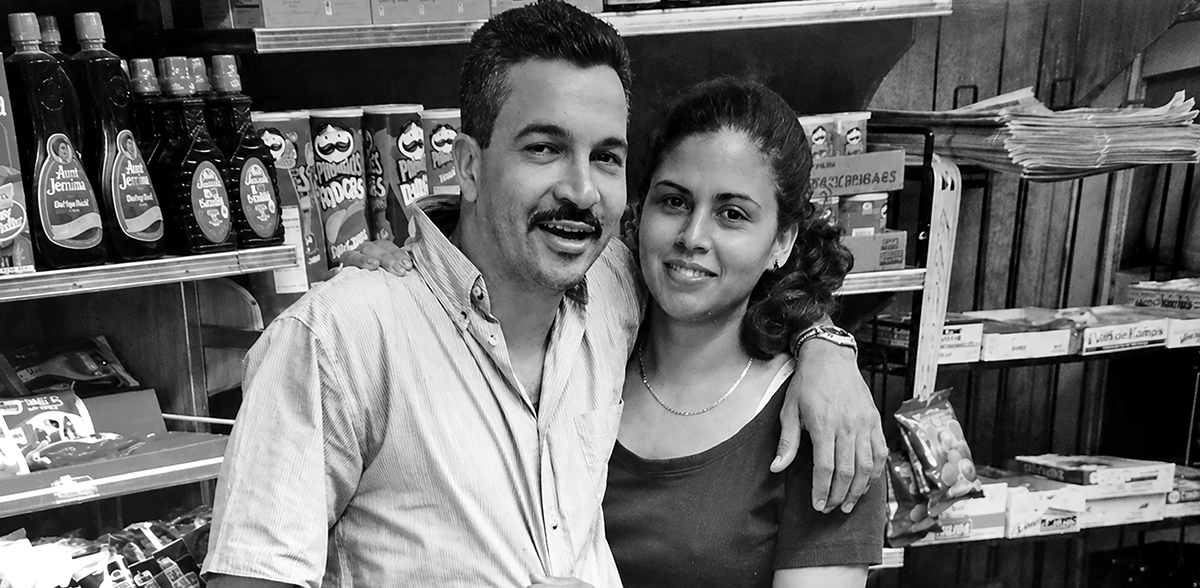
Castillo family photos courtesy of Amaris Castillo
In a neighborhood market, a quick stop for groceries often comes with something extra—a familiar face, a shared story or a conversation that reminds shoppers they’re part of a community.
For decades, the Orlando Latin Market near the corner of 30th Avenue North and 35th Street North has been exactly that kind of place, where customers searching for foods from across Latin America often leave with something even more nourishing—a connection to the people behind the counter and beside them in the checkout line.
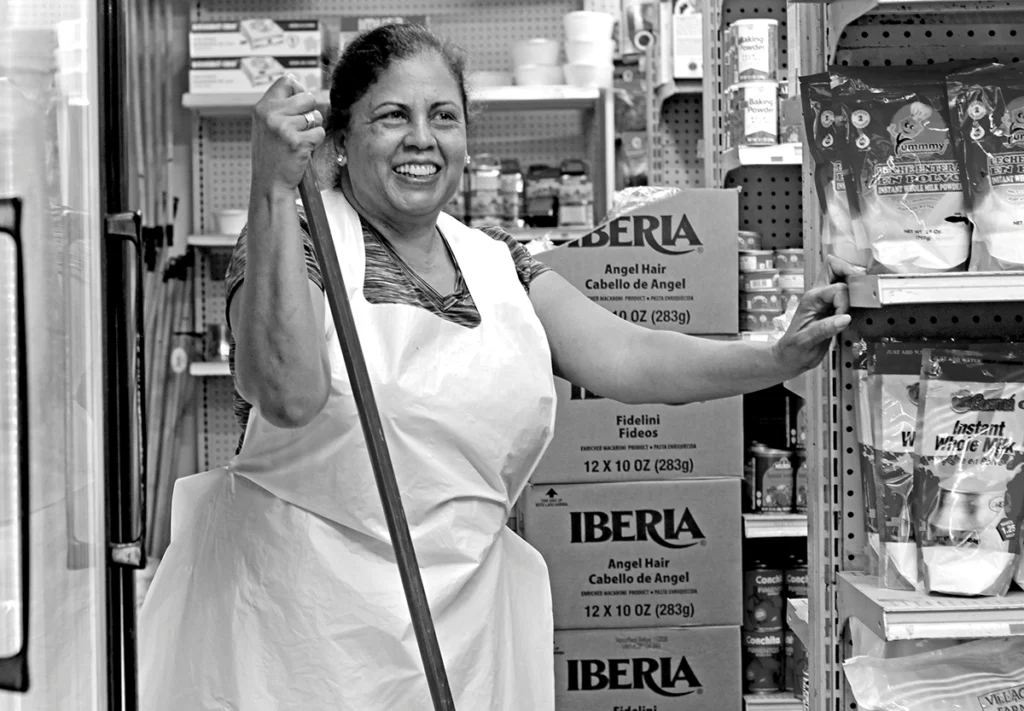
Damaris Castillo
Few have had a front row seat to the market’s role in the St. Pete community quite like Amaris Castillo. As the daughter of owners Freddy and Damaris Castillo, she spent countless hours during her college years working at the family business, where she quickly got to know the people whose lives intersected there.
Though the market may be best known for its freshly prepared empanadas, hard-to-find specialty products like the corn flour needed to make Colombian arepas and colorful bins of fresh vegetables, it’s perhaps the stories of immigration, family, food and identity that have become its lasting legacy.
After creating a website—a passion project to share the stories of the people who orbit the store—Castillo says an editor from the University Press of Florida approached her about working together to create a book that chronicles the real-life experiences and Dominican culture that surrounds the market.
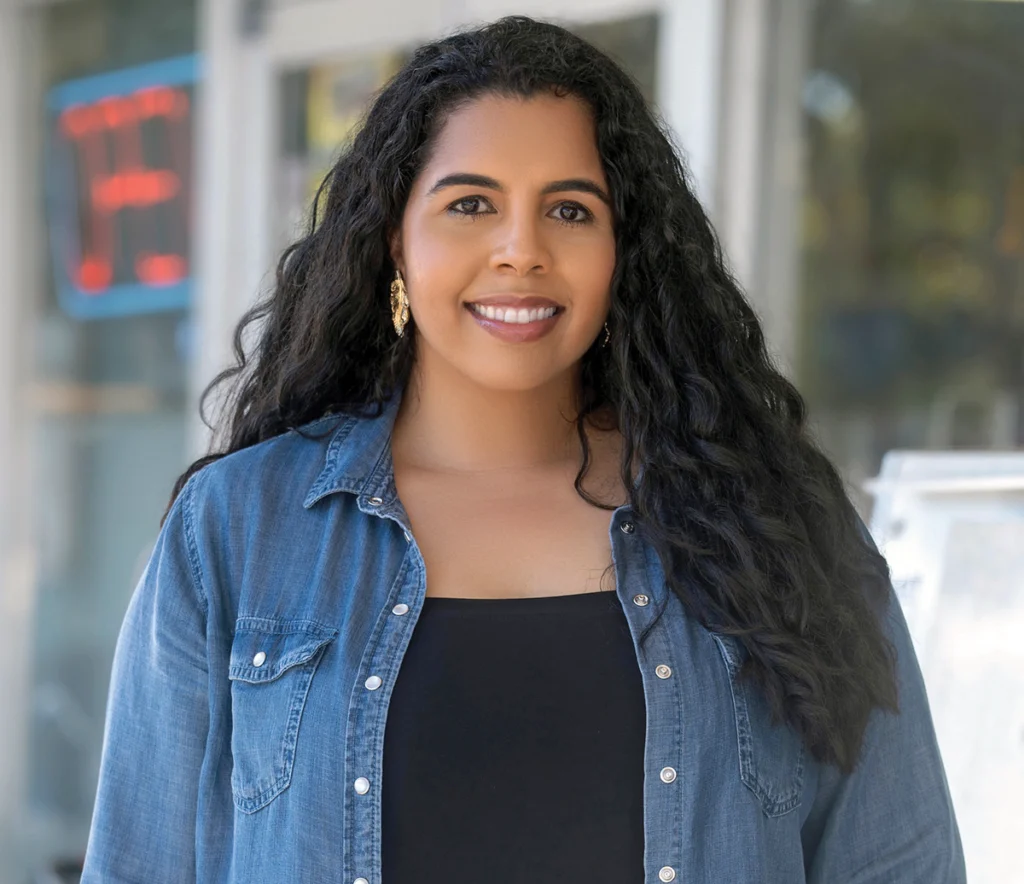
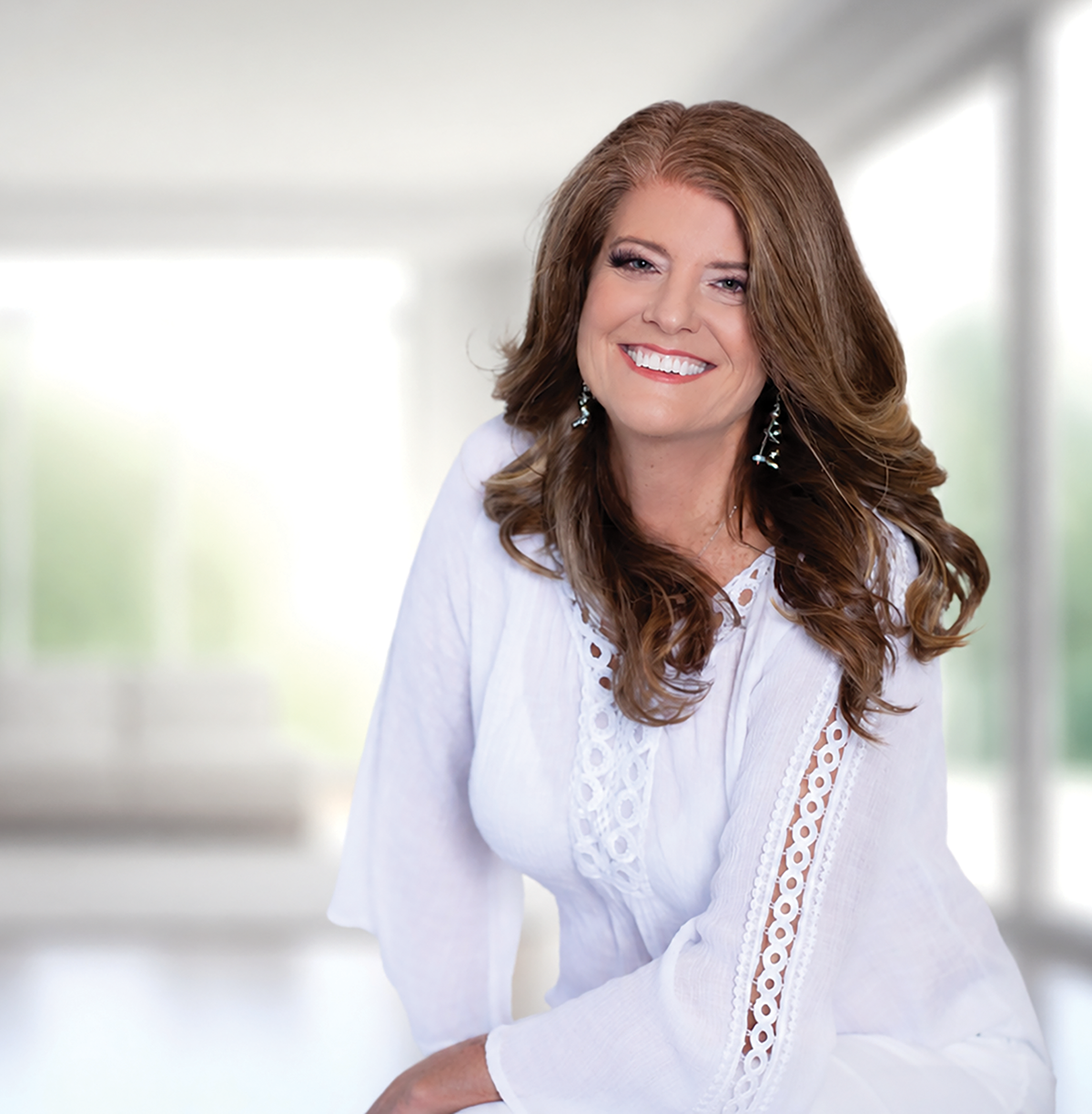
Castillo photographed by Jasman Wynn
Sharing stories was a natural fit for Castillo, now a research/writing assistant for the NPR public editor’s office and a journalist for The Poynter Institute.
“I have always been especially interested in the preservation of culture and food traditions and how that shows up in people’s lives today,” Castillo says. “I think the latter comes from being a child of immigrants and seeing the ways in which my parents have held onto their Dominican roots even as they remade their lives in the U.S. and became U.S. citizens.”
Yet she never could have imagined how diving into the traditions and journeys shared in Bodega Stories would lead her to uncover new chapters of her own family’s history.
“I learned that my grandmother also had a bodega in Santo Domingo for some time,” she recalls.
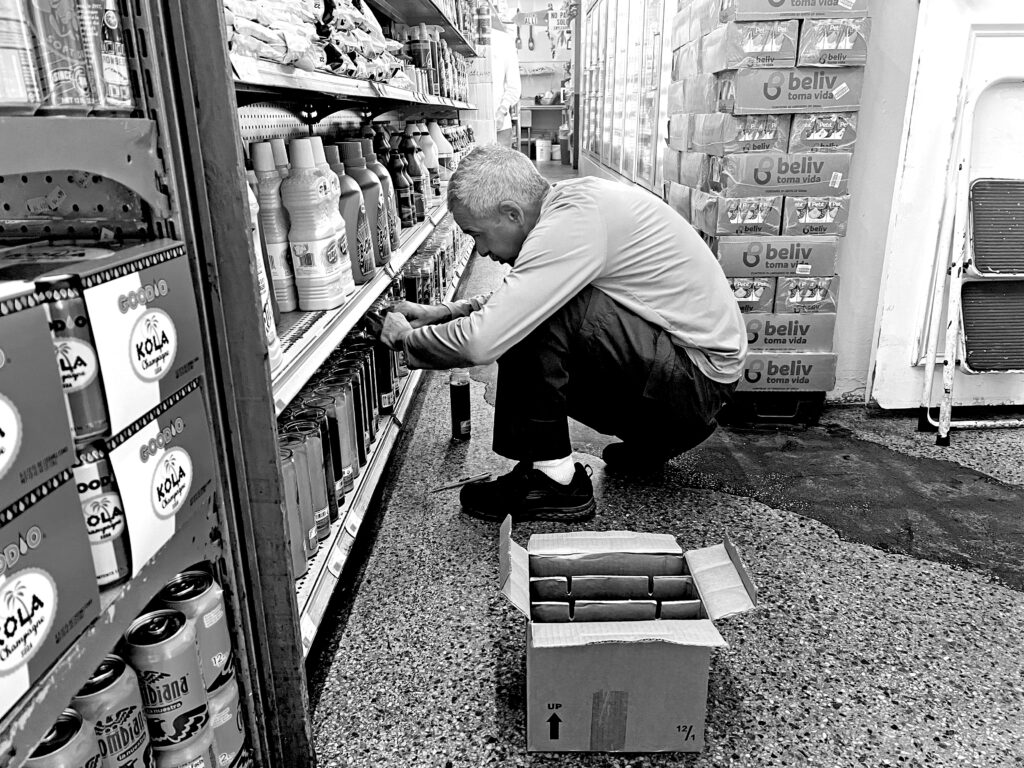
Freddy Castillo
While Castillo describes the bodega as grueling work at times, she’s proud of the legacy her parents have built and excited to share this little corner of St. Pete with the world.
“They are part of a community they helped form, and it’s a beautiful thing to witness,” she reflects.
There are so many people who pass through the bodega every day. How did you decide whose stories belonged in the book?
I began with a list of folks I definitely wanted to include: the store’s employees and a few longtime customers whom I have known for years. The people helped me decide the rest. I approached customers as they shopped, and they either saw the vision or they didn’t. Determining which stories ultimately made it in depended on the interview.
Did writing the book change how you viewed your parents?
Definitely. While working on this book, I heard stories and snippets I hadn’t heard before about my parents’ personalities and the many ways they have shown up for this community. It was a curious thing to reimagine my mother and father as others saw them, not just as my parents.
What does the community lose when gathering places like neighborhood markets disappear?
A lot. The daily social connection of joking with the store owner or running into an old friend while in your neighborhood market is severed. Gone is the sense of a shared identity that comes from the physical gathering of people, especially if it’s a market like my parents’ store.
Did you find that customers were coming for groceries—or for something less tangible?
People definitely came in for groceries and ingredients for a specific meal. But there’s a reason they chose this store. My guess is they came seeking community. They are comfortable here. What was remarkable to me, personally, was their willingness to share their stories, opinions and beliefs. I would not have been able to write this book were it not for every person who agreed to open their mind and heart just enough.
Your family's journey spans the Dominican Republic, New York and Florida. How has that shaped your understanding of home?
Home for me is fluid. It is not one place. I feel love for New York because I was born and raised there. I feel love for Florida because I grew into a young adult here. And I have love for the Dominican Republic because my parents are from there and it’s where I spent nearly every summer as a child. Home is where love resides, and I have found love in every place.
Food is woven throughout the book. What dishes instantly transport you back to your childhood?
The main dish that takes me back to childhood would have to be mangú, which is a traditional Dominican dish made from boiled, mashed green plantains. You usually pair mangú with fried eggs, fried salami or fried cheese. If you use all three, you call it Los Tres Golpes, or The Three Hits. Mangú is easy to make and the pairings add a nice saltiness to the starchy green plantains. I love it. Customers came for all kinds of food, but mostly everything they came for is rooted in their culture and their traditions.
Orlando Latin Market has served generations of families. How have you seen St. Pete's Latino community evolve?
The community has definitely grown. In recent years, many Cubans have arrived in the area around Orlando Latin Market. Some have been able to bring their families to the United States to join them in this new life. Many, though, still have children or aging parents back on the island. I have watched this community grow and join other Floridians who are just trying to live their lives.
What do you hope longtime St. Pete residents—and newcomers—take away from the book?
I hope they gain a new appreciation for a legacy business here in St. Pete and that they learn about the rich stories some of our neighbors are carrying. Especially our immigrant neighbors who cannot simply erase the hardships they endured in their past, or the beautiful things they parted with. Where we come from shapes how we think and understand our current place in the world. Lastly, a trip to the store may feel mundane to most people, but I hope Bodega Stories shows that it has the potential to be the exact opposite.
If someone reads Bodega Stories having never visited a bodega before, what do you hope they carry with them?
If their head filled with color and taste and sound while they read, then I know that I was able to transport them to this special place. I also hope it sparks curiosity about the small businesses in their own community and about the people who orbit them. We can all benefit from listening to each other more. Doing so builds understanding between us, and I think that’s a beautiful thing.
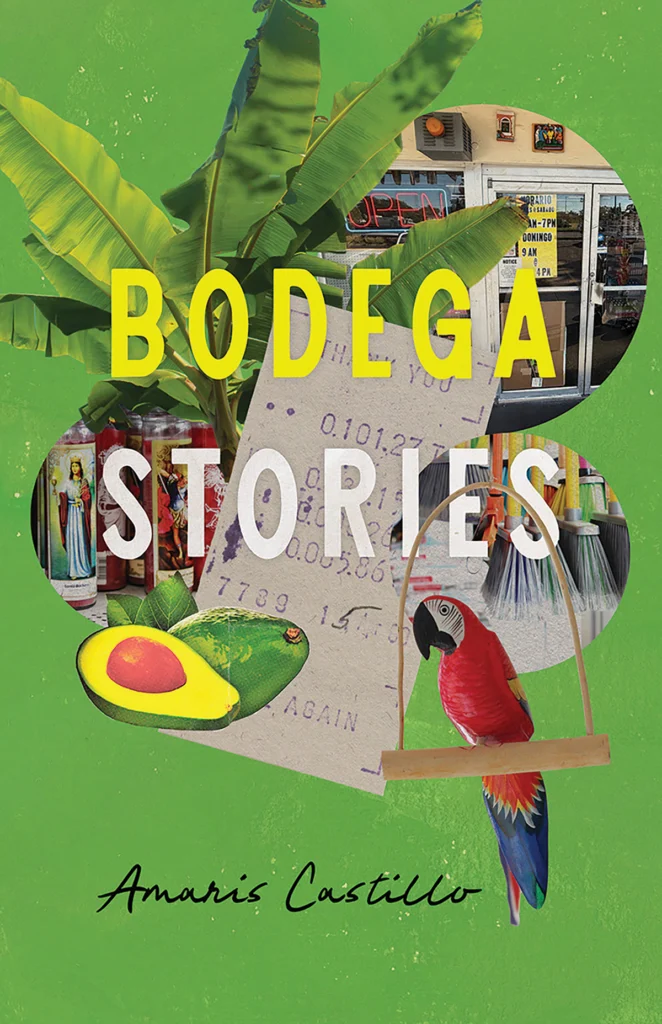
Bodega Stories is available through the University Press of Florida website or major booksellers. It will be released on September 8th, with the official book launch event taking place at 7pm that evening at Tombolo Books.
Visit amariscastillo.com for more information.