Photography by Melanie Thortis
When I enter the room, Morgan Freeman adopts a wide-eyed expression of mock surprise as though he wasn’t expecting me. He smiles and laughs frequently during our chat, but I also get some looks of dismay and he occasionally leans forward in his chair, rubbing the top of his head as if he is straining to stay focused.
The elder statesman of American cinema is a study in shadows and light, with a penetrating gaze and that distinctively commanding voice. Through several encounters over the years, I have found him to be smart, charming and funny, as one would expect, but also downright salty at times. Of course, at 88, he’s earned the right. He also admits that he feels speaking with journalists is “an imposition. You have to do it, but it gets old,” he told fellow actor Dax Shepard on his podcast Armchair Expert. “If I was given a choice, I would not.”
While the sentiment is a sharp contrast from the gentle and benevolent persona he often projects on screen, it makes sense that he feels fatigued by the attention after decades in the public eye.
And though he has embodied a wide range of characters, including one of his favorite roles, playing a pimp in Street Smart opposite Christopher Reeve in 1987, he admits that his breakthrough role as Hoke Coburn in 1989’s Driving Miss Daisy not only placed him in the spotlight but also created a persistent notion in the public’s mind about who he is as a person.
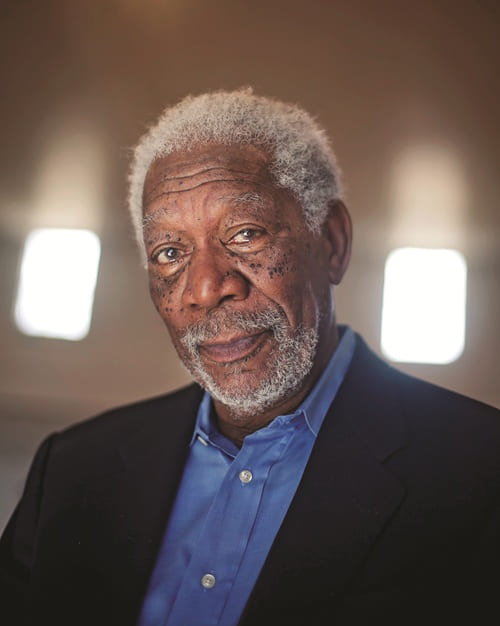
“Well, the character caught on—this wise, old, dignified black man,” he explained during a speech at the British Film Institute. “Some characters become sort of bracketed, identifiable—identified—you and him. Everywhere you go, they're going to expect some aspect of that character out of me. As an actor, I've played just about every role, from a convict all the way to God,” he says, pointing out a unifying thread in the roles he’s been offered over the years. “I am almost guaranteed to be someone with gravitas.”
And though he has become one of the most recognized performers in the world, thanks to roles in such iconic films as The Shawshank Redemption, Unforgiven, Se7en, Million Dollar Baby, The Bucket List and Invictus, to name a few, he offers a rather pragmatic view of how he will be remembered.
“I don’t think in terms of legacy. Who cares? You know what I’m saying?” he asks with a sly grin. “One of these days, in the distant future there won't be me anymore. But they'll be movies. The movies are forever. That's where I'll be.”
Even after all this time, it would seem that who he really is as a person is still overshadowed by our collective perception and shared expectation of who we want him to be. And that’s fine with him.

Among the things you may not know about the Oscar-winner is that he was born Morgan Freeman Jr. and was called Junior as a child. The first film he saw was the 1933 version of King Kong, which remains a favorite. Some of his other favorites, which came years before he shared the screen with either of his legendary co-stars, are Clint Eastwood’s The Outlaw Josey Wales and Jack Nicholson’s Five Easy Pieces. He’s always wanted to work with Meryl Streep but never had the opportunity. He’s an accomplished sailor, an amateur pilot and an avid golfer. He also says the role he is most proud of is the one that was least like him.
“I really liked Driving Miss Daisy,” he admits. “I was channeling my dad. He was a hustler and he did that work for a while.”
He can also be startlingly honest at times, with a sense of humor that sometimes runs to the bawdy, which can be an issue for men of his age when navigating the modern world. He encountered a bit of that in 2018 when he came under scrutiny for allegedly making comments that objectified some of the women he came into contact with professionally. He quickly issued a statement apologizing and managed to navigate those allegations without any lasting damage to his reputation.
“Anyone who knows me or has worked with me knows I am not someone who would intentionally offend or knowingly make anyone feel uneasy,” Freeman said in a statement sent to The Associated Press. “I apologize to anyone who felt uncomfortable or disrespected—that was never my intent.”
Giving Back
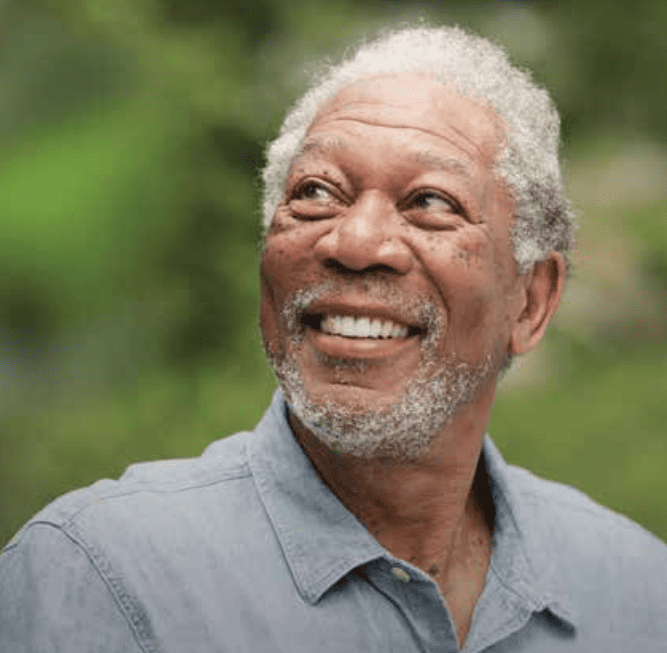
Running parallel to all the other aspects of his persona is his consistent commitment to humanitarian work and activism on behalf of many educational and environmental organizations, regularly speaking out against social injustice and supporting causes he feels passionate about.
“I don’t think of it as charity. This is what I have to do. This is doing what we have to do as human beings. We’re all in this together,” he offers. “I started a foundation. My daughter Morgana drives it.”
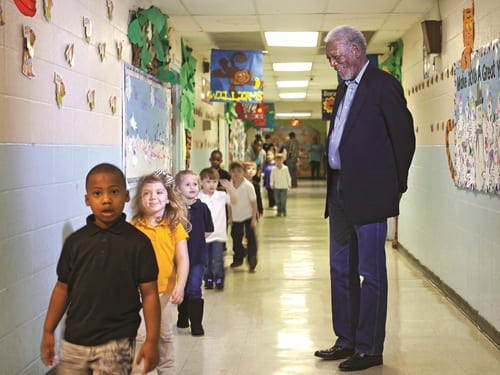
Launched in 1991, the Rock River Foundation was established to focus on early childhood education for underserved youth in his native Mississippi. It was later renamed the Tallahatchie River Foundation, after his home county of Tallahatchie.
Morgana Freeman joined in a leadership role in 2012 and wanted to strike a balance between Freeman’s desire for statewide impact and narrowing the focus. The foundation then established the Tallahatchie Early Learning Alliance (TELA) as a countywide holistic approach to early childhood development and the Mississippi Early Learning Alliance (MELA) to strengthen statewide coalitions advocating for early learning systems change. In 2024, the SonEdna Foundation evolved from the Tallahatchie River Foundation.
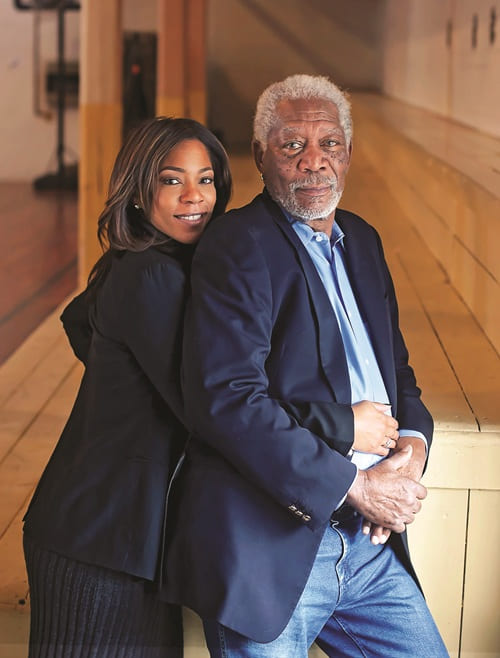
“When my father first began the work that would one day become SonEdna Foundation, his goal was simple yet profound: to open doors of opportunity through education and the arts,” Morgana explains. “When I joined, our discussions turned toward focus and how to take that broad vision and bring it to life in ways that could last. That is when we began shaping a model grounded in curiosity, collaboration and learning in action, which are the principles that still guide the foundation today. TELA and MELA showed us learning doesn’t stop with children. It must extend into adulthood. Engaging with stakeholders revealed the need to build a culture of lifelong learning. As our work expanded, so did our understanding: impact is greatest when done with the people we serve, not for them.”
The next chapter for the foundation is all about building upon that work and continuing to evolve it, to empower others in the community.

“We both believe that giving should be about building something that lasts and that true impact begins when people work together to strengthen their own communities,” she explains. “My father helped plant that vision and I have had the privilege of carrying it forward. I was raised to understand that service is our responsibility. It means seeing where help is needed and standing beside the people who are doing the work every day. That belief has guided my family for generations. My father taught me that when you have the ability to make a difference, you do not wait for someone else to act. You take part in the solution. He showed me that giving is not a moment. It is a way of living. When I think about my father’s legacy of giving, I see more than a pattern of generosity. I see a lifetime of purpose. His legacy lives in many forms. It lives in his body of work, where the characters he has brought to life have reflected perseverance, integrity and resilience. It lives in the choices he has made to give back to the place that raised him. And it lives in the example he has set for our family about what it means to act with intention and to use what you have to help others rise.”
Rhythm & Soul
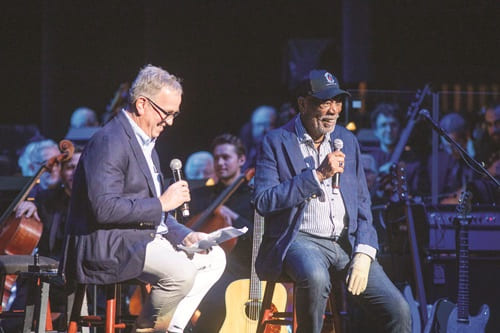
The reason for Freeman’s visit to St. Pete on September 25th was to bring his national tour of the Morgan Freeman’s Symphonic Blues Experience here for a collaborative concert with The Florida Orchestra. The show is a stirring celebration of the soul of the Mississippi Delta—where the blues genre was born. Freeman has been a lifelong advocate for preserving the music and culture of the region. As a co-founder of the world-renowned Ground Zero Blues Club, Freeman has dedicated himself to celebrating the musicians who shaped this powerful genre and is using the show to highlight the next generation of performers
“The blues comes from the most basic visceral expression of humanity,” he says.
His eyes brighten as he shares that after testing it out with performances in Savannah, Ireland and Austria, he thought, Wait now, this works. This is very cool.
“We're taking two different classical genres and we're merging them,” Freeman explains.” And it is such a wonderfully unique and satisfying experience. What is it about music? It makes us feel good…makes us human. We've had it here as long as we've been here. This music started in cotton fields with some woman snatching cotton and humming, and then everybody picking it up. The next thing you know, we're all in church and we're singing. Then somebody goes out to a juke joint and takes that music and puts a different beat and different words to it. Now we've got the blues. And here we are in 2025 and we're taking music from that far back and we're merging it with European classical music. It works, it just kicks butt. Nobody has come to one of these concerts and said, ‘Why are you guys doing this?’” he continues, drawing his face into a scowl. “They all come away from this concert going, ‘Yeah, that's something else.’ So, we're just gonna keep doing it.”
At the beginning of each performance, he appears on stage with his business partner Eric Meier to introduce the show and partake in some fun banter. He was in exceptionally fine form in St. Pete, laughing and engaging the audience, throwing open his arms to us like a warm embrace.
After the show, Meier guides me to his dressing room door. “You remember this guy,” he half asks, half urges.
“Yes,” Freeman replies with a wide smile, springing to his feet with his hand outstretched. “What did you think of the show?” I offer my praise, because it was legitimately one of the most exciting and inspired performances I'd experienced in a while.
It was a beautiful piece of storytelling that touches on our shared humanity and felt like a celebration between the artists on stage and the audience. In that moment, I can feel a sense of pride in him. I can see it in his eyes. He was the conduit for bringing it to life.
I also feel this sort of expectant intensity that comes along with standing face to face with a legend like Morgan Freeman. I have only ever felt it a couple of times before, once with Harrison Ford and once with Nelson Mandela. We are not friends, but for a moment maybe I am also not the imposing journalist. Suddenly, I wonder if he can sense my thoughts because he reaches over and gives my shoulder a slight tap. “Well…” he utters almost to himself, a sly smile forming more in his eyes than on his mouth, “You take care.”
But what I hear in my mind is, Son, I’ve got places to be. And with that, he is on his way. He’ll be in another city the next day, doing it all over again. He seems to be committed to continuing for as long as there are cities to visit, with no signs of slowing down.
Freeman will return to the big screen on November 14th in Now You See Me: Now You Don't and is producing the limited series The Gray House, a Civil War epic, with Kevin Costner, which will stream on Prime Video in early 2026.
As we walk to the car, one of the friends who accompanied me backstage is moved to simply utter, “Wow,” repeatedly. It makes me chuckle because I understand the feeling. It’s a lot to take in. But then, that’s the way it is with legends.
Visit symphonicblues.com for tour information and sonedna.com/foundation to learn more about its mission.