Photography by Emily Will.
On Beach Drive, a playful 30-foot sculpture marks a decisive moment for St. Pete’s oldest art museum. With the unveiling of Magic Grasshopper by Chicago-based artist Yvette Mayorga in front of the museum’s facade in late March, the Museum of Fine Arts (MFA) enters a new phase—one that offers a glimpse into the vision of Executive Director and CEO Klaudio Rodriguez, who has spent the last year reexamining what a historic yet contemporary art institution can be and shaping the museum’s future trajectory.
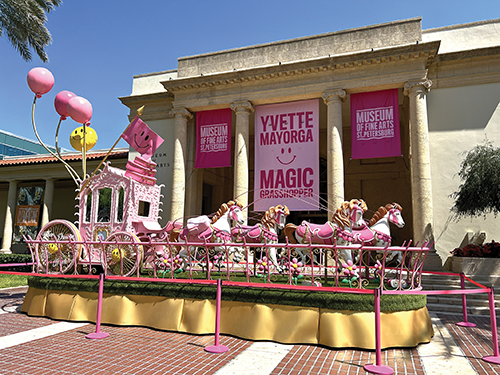
The campy aspects of the sculpture, which made its debut in New York City’s Times Square in late 2025, cloak the artist’s politically charged commentary on migration, feminized labor, colonial history and the pursuit of the American Dream.
“St. Pete just got a sugar rush…bold, pink and impossible to miss—like a fairytale carriage dipped in frosting,” one local posted on social media. “But look a little closer… it’s not just sweet. It’s a story about hustle, identity and what it really takes to chase a dream. Only in St. Pete—where art hits you in the eyes and the soul.”
To the casual passerby, it can read less like a statement and more like a convenient selfie backdrop. But for Rodríguez, who inherited a full slate of planned exhibitions when he came on board, recent projects like this public art installation, on display through July 26th, reflect his emerging influence and his desire to engage visitors in new ways.
The Visionary
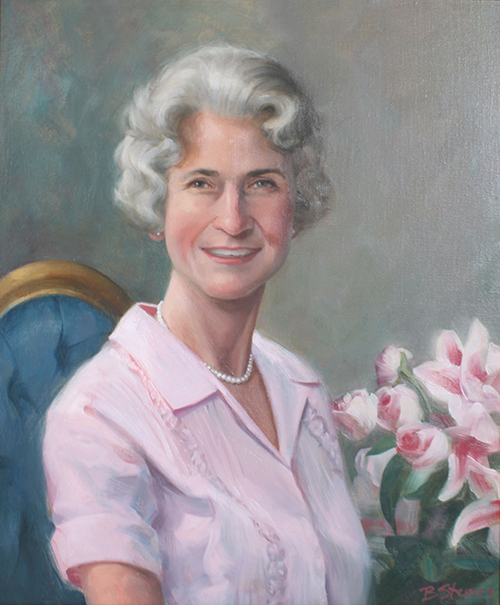
The founder of the MFA, Margaret Acheson Stuart (1896–1980), was a passionate art collector and philanthropist. A cultivated woman of means, she traveled frequently, was well acquainted with major museums across the globe and built a significant personal collection of European and American art. She believed those works should be shared with the broader community rather than kept privately, shaping a vision for an accessible museum where world-class art could be experienced free of charge in an intimate setting.
In 1961, at age 65, she approached city officials with a bold proposal to establish a major art museum, committing $150,000 toward construction, a $1 million endowment and at least $10,000 annually for operating costs. She requested the museum not be named for her so it would feel fully open to the public. The City of St. Petersburg provided the four-acre waterfront site at Beach Drive and Second Avenue Northeast.
At the time, St. Pete was still far from established as an arts destination. Bringing the museum to life required more than funding—it meant building credibility from the ground up and convincing the public of its value in shaping the city’s cultural identity. The MFA was incorporated later that same year and Stuart also donated significant works from her personal collection.
Due to construction delays, the museum did not open until early 1965.
The Opening Gambit
Despite her passion, Stuart did not have enough art to fill the museum beyond her own collection, nor the resources to acquire major works at scale. Instead, she and founding director Rexford Stead leveraged relationships with leading institutions—including the Museum of Modern Art, the Guggenheim, the Museum of Fine Arts, Boston and the National Gallery of Art—to secure works of art on loan.
In total, 80 public and private lenders contributed nearly 100 works, valued at approximately $3 million, bringing artists such as Monet, Rembrandt and Whistler to St. Pete. The success of the inaugural exhibition generated strong interest and support, allowing the museum to begin building its permanent collection.
In 1970, Stuart donated an additional $300,000 to complete the original plans, including a sculpture garden where her ashes were later interred. Following her death, the museum continued to expand, adding a second floor in the 1980s and introducing admission fees in the 1990s, ending nearly two decades as one of the country’s few free museums.
In 2008, the $21.2 million Hazel Hough Wing was added, designed to complement the original 1960s building while introducing a modern glass-and-concrete structure. The expansion added more than 30,000 square feet, doubling the museum’s footprint and creating space for both the permanent collection and traveling exhibitions. A two-story glass conservatory connects the buildings, offering a community gathering space with views of the bay. Rodríguez’s office overlooks the scene, which he has grown to appreciate after something of a tumultuous start.
The Arrival
Like a plotline of a Hollywood disaster film, Rodríguez found himself at the heart of an epic storm when he began his new position in October 2024. In the wake of the devastation wrought by Hurricane Helene, residents faced further threats from the impending arrival of Hurricane Milton, leading to mass evacuations. He arrived within the two-week period just before that second historic storm was about to strike St. Pete. As the museum team worked to move artwork to higher ground, Rodríguez volunteered for sandbag duty.
He was admittedly nervous about the prospect of spending the night at the B&B he had rented—a 1920s wooden structure with lots of windows—so when staff asked if they could ride out the storm at the museum, he joined them.
“We had a night at the museum. We projected movies on the walls and slept here,” he explains. “It was a fun way to get to know some of the staff.”
Although the hurricanes caused widespread destruction, the MFA, which turned 60 last year, weathered the storm unscathed.
Rodríguez was joined by his wife, Emilie, along with their daughter a short time later and they have settled in Old Northeast. If he’s encountered storms of any other kind since taking over, he’s keeping them close to his chest.
The Steward
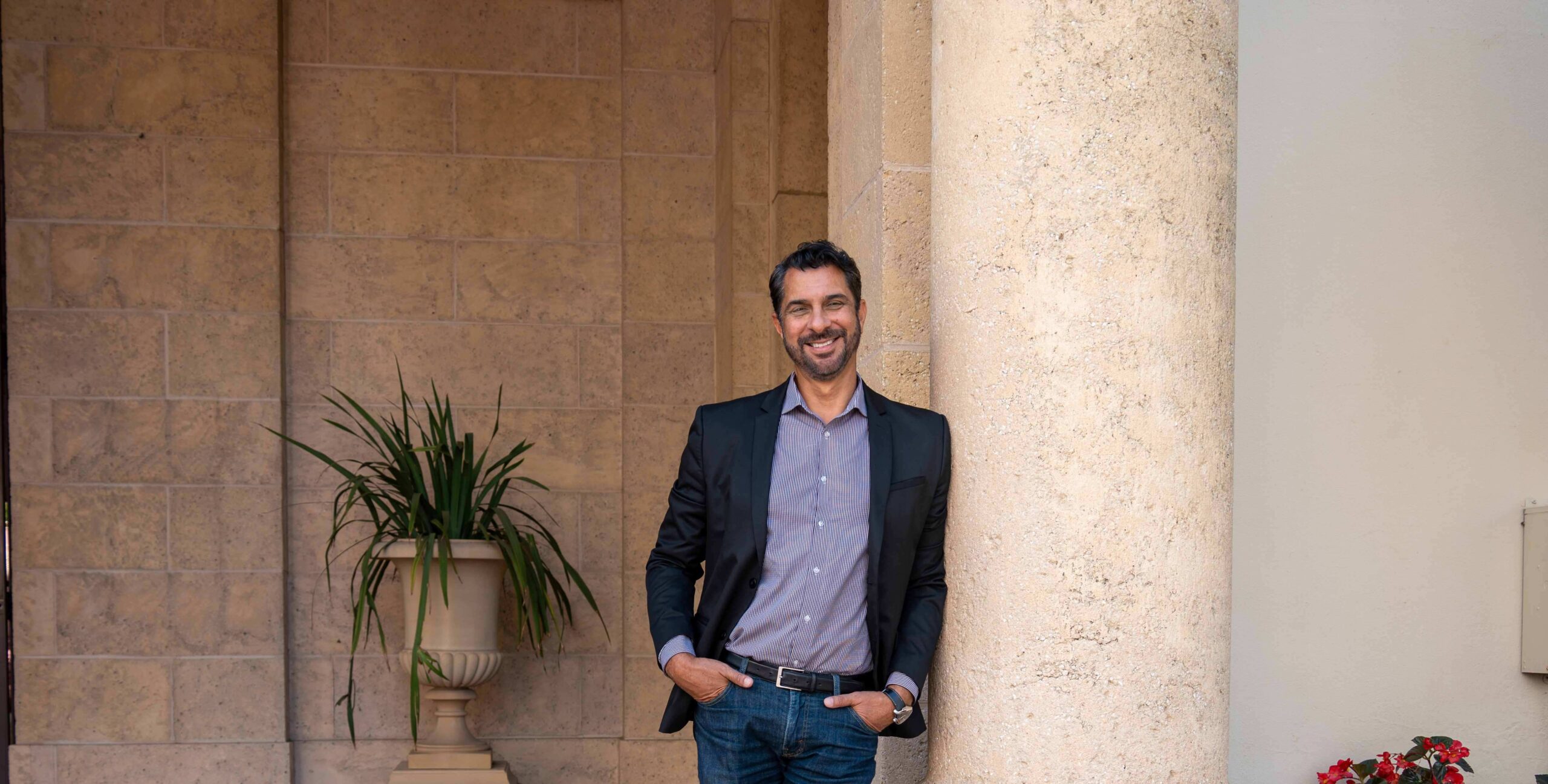
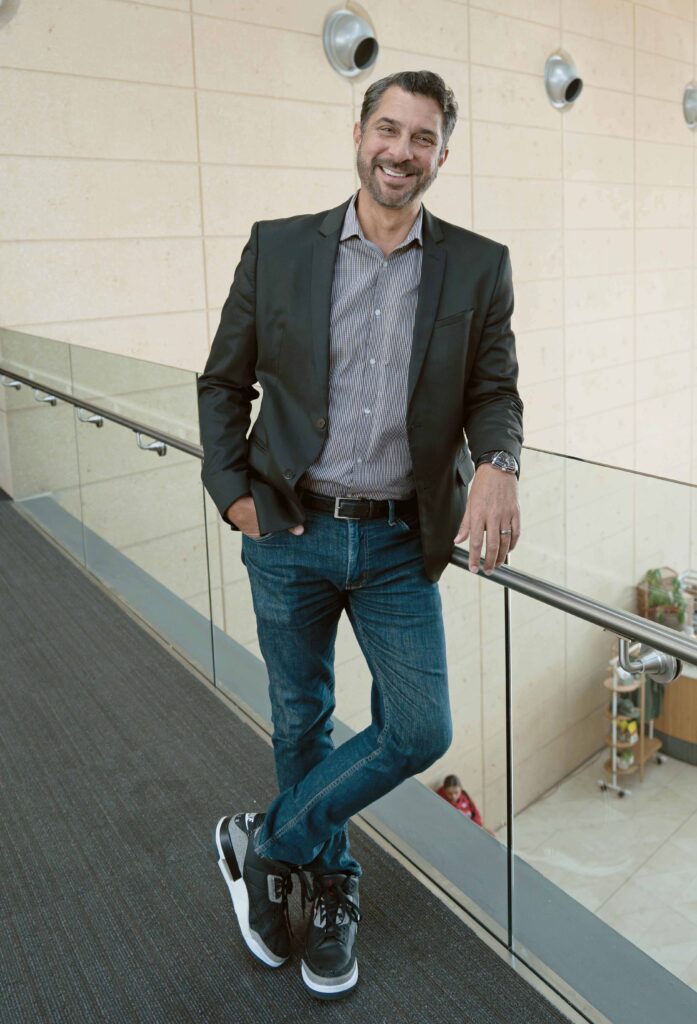
On a crisp spring afternoon, I am ushered along the quiet corridor of the museum’s administrative suite on the second floor of the original building. I am greeted warmly by Rodríguez at his office door and we settle in for a chat. He is charismatic, polished and a seasoned communicator who peppers the conversation with key talking points—a reflective stream of consciousness in which he moves assuredly between ideas, often bridging topics mid-thought, shaping a narrative arc in real time.
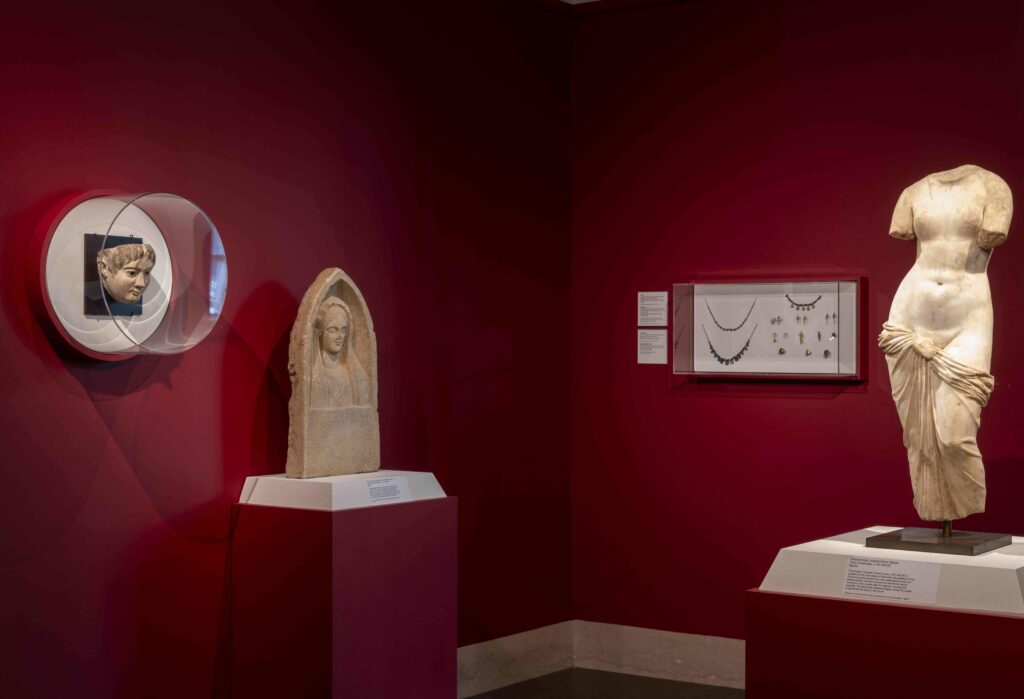
As I watch and listen, my thoughts drift to the fact that just below us is a grouping of antiquities from the ancient world, including an Egyptian funerary mummy mask, a marble sculpture of the Roman Emperor Augustus and works from the Olmec, Maya and Aztec civilizations—faces from history that engage museum visitors with their backstories.
Before me is the institution’s other public face, his features similar to those used by classical sculptors to convey dignity and intellect. But he is a modern man of his own making, with a compelling backstory of his own, one shaped by early upheaval and leading to an opportunity for reinvention.
Born to a Nicaraguan father and Croatian mother who met in Rome, Italy, his parents settled in Nicaragua until political turmoil there forced them to flee to Miami.
“I was 6 years old,” Rodríguez shares. “The only things we had came in the suitcases that we brought with us.”
With limited opportunities in their new home, his father worked as a security guard at a hotel in Miami Beach while his mother worked nights as a cashier at Walgreens. Rodríguez credits his mother for sparking his fascination with history and the world of art through experiences they shared when he traveled with her to visit their extended family abroad. But he recalls that, from a very early age, both his parents made a point of instilling in him an appreciation for the arts and for the community they came to call home—something that has shaped how he sees the world to this day.
“We didn’t have much,” he confides. “But they knew the value of arts and culture so any time there was a free museum day or an event at a library, we went.”
As a child, he told his parents he wanted to be a bus driver because he thought it would be cool to go places and meet all kinds of people. By high school, he knew he wanted something creative and connected to history. For a time, he considered becoming a historian or educator, but Rodríguez studied art and architecture before realizing those areas were not his calling. He instead focused on art history, where he began to see himself as someone who could help guide artists along their journey and make their work more accessible to the public, eventually leading him toward curatorial work.
Throughout his professional career, Rodríguez advanced through a series of roles that moved from the technical side of collections cataloging for an art storage company into formal museum work.
He spent 10 years as chief curator at the Frost Museum in Miami, followed by seven years as executive director of the Bronx Museum of the Arts. In that role, he oversaw institutional vision and strategy, educational and outreach initiatives, research resources, the collection and exhibitions, as well as an ambitious $43 million capital project.
So, when a search firm initially contacted him about the opportunity at the MFA, he did not feel a strong draw.
“Why would I leave New York for St. Pete?” he recalls thinking. “But they said, ‘Come down, give it a chance, look at it.’ So, I did, and I walked around and I was so pleased. There's clearly this investment in culture in the city.”
Upon viewing the art spaces, including the museums and mural projects, Rodriguez had a change of heart.
“It reminded me of Brooklyn in some ways, all these little coffee shops, funky shops, bookstores and just an incredible energy. And I said, this is a place that really values culture and community. That was exciting to me,” he offers. “I could see the opportunities, because this museum could be so much more. And you can’t beat this view.”
He returns often to that view of the bay, a reflection of both the area’s natural beauty and the quality of life he has experienced since moving here.
“This place allows me to really have a balance with my personal life that I did not necessarily have in New York,” he enthuses. “That ability to step out into nature resets me—allows me to spend quality time with [my daughter], enjoying nature and being outside. But to me, as far as my best life, I think you can tell…I love the work that I'm doing. I believe in it. I think it's really important.”
From this vantage point, he is charting the museum’s next chapter. It sits at a crossroads—balancing reverence for its history with the need to remain relevant in a city rapidly reimagining itself as a global arts and culture destination.
“My goals in St. Pete include building community connections and trust, internally and externally, and bringing happiness back into the equation. How do we have fun as an institution? How do we make this a joyful place where people come and want to spend time?” he says, almost rhetorically. “I want my impact to be felt in the ways people experience and connect with art—through bold, creative exhibitions and programs that spark curiosity and conversation.”
Current Challenge
The MFA is dedicated to presenting the breadth of human culture across time and geography. Like many legacy institutions, it now faces the challenge of balancing long-term preservation with the need to remain relevant, inclusive and responsive to contemporary society.
“Museums are not necessarily just about object-based exhibitions. Programming really is about the public, the art and the issues that are happening in the world. And in today's society to be a relevant and engaging and important institution you have to bring diverse voices to the table,” Sandra Jackson-Dumont, an independent scholar, museum educator and cultural strategist, commented during her tenure as chair of education and public programs at the Metropolitan Museum of Art while participating in a documentary about the museum’s 150th anniversary in 2020.
Her perspective reflects a broader shift as institutions reconsider how they engage with audiences and address questions of diversity, relevance and social responsibility. It also speaks to the central challenge Rodríguez now faces. While many of the previous exhibitions were already in planning when he arrived, he notes that his influence can be seen in the museum’s two newest shows, which opened in April.
They are also part of a fundamental distinction in how he thinks about the institution itself.
“Oftentimes there's a belief that contemporary art is something that's either facile and ready-made or complex and hard to penetrate. What I say is, ‘Everything you see in this museum was contemporary at one moment in time. It was of its time. It was produced during a particular time when it would have been considered contemporary for that period. And it had something to say about its time. It's just the same when we talk about contemporary art now. It’s all work that is reacting and reflecting to something of our contemporary existence,” he offers. “We want to be able to talk about challenges of our time, the concerns of our communities and the people that we're engaging with. It's not about contemporary art. It's about being contemporary in the conversations and the way we present the work. That's the difference between contemporary art and a contemporary museum. I want to keep drilling down on that distinction, because it's really important.”
With that framing established, he has leaned into the conversation through exhibitions informed by his vision.
“These are absolutely the first two exhibitions that are completely organized and originated by me. I would say they mark the beginning of me putting things in motion that I want to doI've always felt like my role is to open a dialogue. I’ve never felt like it's my position to posit it in a hard perspective. I just want to present work that challenges and makes you question some things.”
Like Mayorga’s sculpture, the work of these artists explores intricate and timely narratives that engage complex issues and themes.
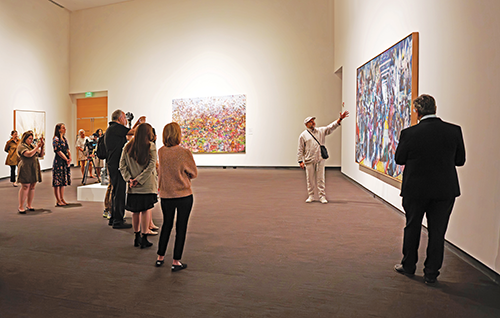
“I've been familiar with these artists for many years and when I started to think about how we would incorporate them, the timing just worked,” he explains. “The opportunities come and when they do, you avail yourself of them and make sure that you maximize those opportunities and put them out there at the right moment.”
This was that moment for Ali Banisadr: The Alchemist and The Last Library IV: Written in Water.
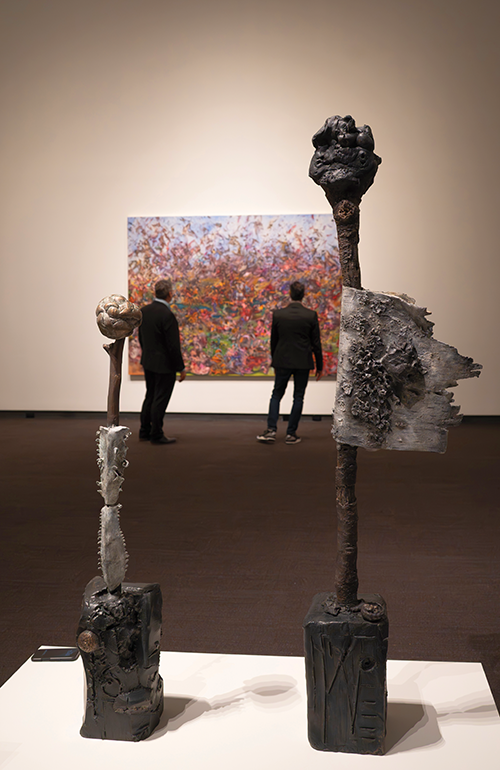
This is the first major U.S. museum exhibition for Banisadr, a contemporary artist born in Tehran, Iran. The exhibition spans nearly 20 years of work across painting, drawing, printmaking and sculpture. Drawing from sources that range from Mesopotamian antiquities to surrealism, abstract expressionism and early-‘90s graffiti, his work balances chaos and composure, abstraction and representation, shaped by early experiences of conflict. His compositions weave together history, mythology, autobiography and global events, offering reflections on the human condition.
“I was 3 when the revolution happened and 4 when the Iran-Iraq war happened, so I lived through it for eight years,” he shares. “As a kid, I’d make drawings to create these internal worlds to try to understand the external world. It was a way to cope with very large, abstract situations that your mind can't comprehend, break it down and try to understand. Even today, I tend to do that. A lot of other Iranians I know, they started reacting right away. I don't react right away. The emotion is like the fuel that pushes me to spend the time to dive deep and try to understand these things. If there was no emotion, then there would be no fuel to push me in that direction. The emotion is there, but the logic also has to be there in order to get combined with the intuitive emotional response. But for me, it's more about understanding the grander picture, grander history, grander reasons behind things to try to make sense out of it all.”
“I've known Ali for years and had considered working together while I was in New York,” says Rodríguez. “What fascinated me was how deeply he engages with art history. When I came here, I immediately saw how his work could connect with our collection because he draws from so many influences. We even borrowed a work from a local collector and installed it in our Renaissance galleries to place it in dialogue with historic works. That connection reinforces the idea that contemporary artists are not working in a vacuum—art history builds on itself.”
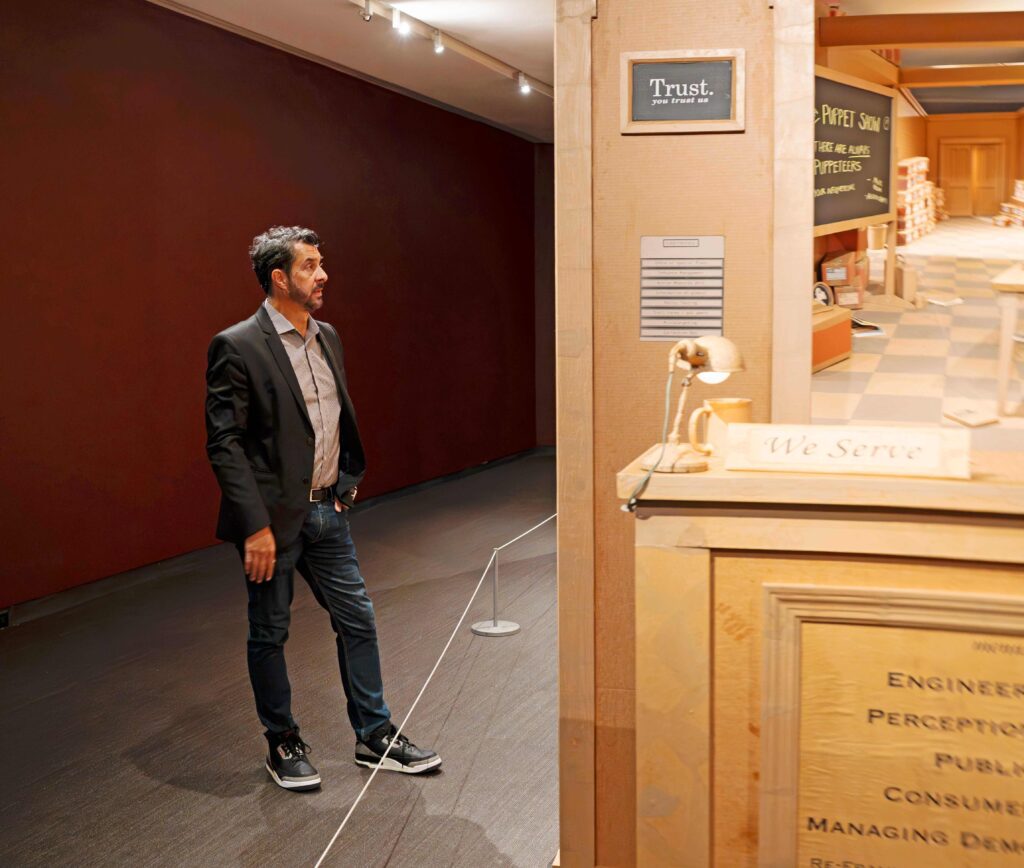
The second installation, The Last Library IV, created by artists Ward Shelley and Douglas Paulson, explores themes of misinformation and banned books.
“The technology of the written word was probably the keystone in our attempts to build a just and fair society and has been an essential component of democracy,” Shelley offers. “Terms such as evidence, authority and the rule of law are meaningless without the written word.”
The installation presents a distorted archive—a “detention center for the written word,” as Shelley describes it—where ideas appear to be in the process of being erased. Constructed from corrugated cardboard—a material both sturdy and impermanent—it combines fake books, real titles, diagrams and documents to challenge perceptions of authority and truth.
“For more than 5,000 years, the written word has helped build fairer societies… Without writing, words like evidence, authority and rule of law lose their meaning,” the collection notes read. “But in today’s post-Truth Era, it is harder to tell fact from deception or fiction from fantasy.”
Pretty heady territory for a stately Florida museum.
“It really is so on point with what's happening in the world right now. The confluence of these two exhibitions was kismet,” offers Dr. Stanton Thomas, the Hazel and William Hough Chief Curator. “Both have very similar goals, which is the idea of transformation. I think it signals a new chapter. It's an amazing opportunity for dialogue, to get people to come in and look, to get people to think about what's happening in the world right now.”
Both exhibitions run through July 12th, with additional programming already in development for the remainder of the year and into 2027.
Outside Forces
Rodríguez also hopes to reimagine the museum’s campus.
“It’s a multi-phased approach,” he says. “The work you see outside right now is temporary, but I’m also working to bring in sculptural pieces that could become more permanent. I’m collaborating with architects to better integrate the campus with the community—whether that’s the parkland next to us or the space in front of the museum. The goal is to create a more accessible and engaging outdoor environment.”
Modern Motivations
Many museums are rethinking traditional models of fundraising and engagement, working to broaden access and connect with a wider public. Progress on that front may prove to be one of the institution’s more complex challenges as it navigates the gulf between perceived barriers and the need to create meaningful access for the entire community. But in terms of programming and meaningful engagement, Rodríguez is already focused on what can be achieved.
“We want to break the myth that museums are only for ‘certain’ kinds of people,” he says. “It’s for everyone. We are here for the community—it is a welcoming and engaging space. We are going to be working very hard to improve on that. My job, if I’m doing it successfully, is making it resonate with you. If I’m not, then I failed.”
Today, the man who once dreamed of transporting people as a bus driver is creating a space for connection, moving through the galleries and chatting with visitors whenever he can.
“I love to hear what they think,” he says with a growing smile. “I want my impact to be felt in the ways people experience and connect with art—through bold, creative exhibitions and programs that spark curiosity and conversation.”
It would be easy to imagine that Rodríguez’s kinetic energy and promises to create a “more fun, cooler” experience might stir concern among the MFA’s old guard, but, so far, his forward-thinking vision has been embraced and may be the very things that push the museum into a more dynamic and sustainable future.
Visit mfastpete.org for more information.