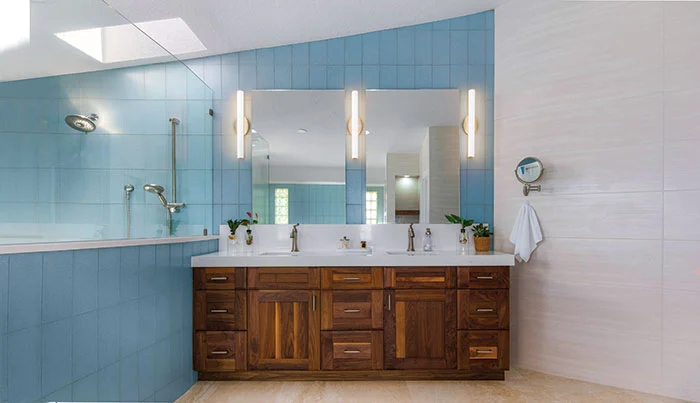
When it comes to home renovations, a bathroom remodel is one of the most complex and intricate projects you’ll tackle. It may be the smallest room in your house, but it’s undoubtedly one of the more challenging and expensive spaces to upgrade. The bathroom also serves as an essential retreat where you can unwind and recharge. So, how do you make this often-overlooked space into your dream bathroom?
A bathroom should be more than just a functional space—
it should feel like an oasis. Many homeowners today are incorporating spa-inspired features into their remodels, transforming their bathrooms into places of peace and relaxation.
Start with the shower. A large rain showerhead can create a soothing downpour. For the ultimate relaxation, Bluetooth speakers can be integrated into showerheads or fan/light fixtures, so you can enjoy your favorite music while you unwind.
With a bathroom remodel, there are three key plumbing areas that must be addressed: the sink, the toilet, and the tub or shower drain. These elements are foundational, so it’s important to plan early for where each fixture will go. One area where planning is especially crucial is shower access—
will a fixed glass panel with a hinged door work, or do you need sliding doors for easier access? Likewise, towel racks, double sinks, and other fixtures need to be thoughtfully placed for both aesthetics and function.
Given the compact size of most bathrooms, every inch of space counts. For instance, if you're planning to install a freestanding tub, you’ll need to ensure there’s enough room. Your bathroom will need to be at least 120 square feet to fit comfortably.
Another important decision is whether you need double sinks. A double vanity can be a great option for shared bathrooms, but ensure there’s enough space—typically, a 60-inch vanity is the smallest size for two sinks.
Perhaps one of the most overlooked elements in bathroom design is lighting. Many people rely on a single light above the mirror, but that setup can cast unflattering shadows. Wall-mounted sconces or lighted mirrors are an ideal solution, as they direct light at a 90-degree angle to your face, providing soft, even illumination.
When installing lights and mirrors, remember that placement impacts electrical needs. The best time to choose fixtures is early in the design process so that your electrician can plan for the correct outlets. Avoid the frustration of needing to move an outlet later in the process and causing unnecessary drywall cuts and repainting.
For overhead lighting, LED recessed cans are an excellent option, especially for the shower or toilet areas. Just be sure the one over the shower is rated as waterproof.
Good ventilation is essential in the bathroom to keep moisture under control and prevent mold. Building codes require ventilation unless there is a window in the bathroom. Exhaust fans are rated in cubic feet per minute, which is based on the room size and modern exhaust fans are quieter than their older counterparts.
One of my favorite design tasks is ensuring that all lights and fans have separate switches. It’s a small detail, but one that can make a huge difference. You don’t want your exhaust fan running every time you turn on the bathroom lights. Separate switches allow you to control the ambiance in your oasis and avoid unnecessary energy use.
Doug King is the owner and president of King Contracting. For more information, visit dougkingcontracting.com